
 0
0 0
0Title:
DiPaSE: A one-pot DNA assembly method for accurate and efficient refactoring of high-GC, long BGCs
Astract:
Actinobacteria constitute a rich source of bioactive natural products (NPs). However, the engineering of their long, high-GC biosynthetic gene clusters (BGCs) remains challenging owing to the low efficiency of conventional multiplex editing methods. To address this limitation, a novel one-pot DNA assembly method termed “DiPaSE” (direct pathway synthesis and editing) has been developed for the efficient synthesis and simultaneous editing of high-GC BGCs. DiPaSE enables the accurate assembly of multiple high-GC DNA fragments with a size of up to 60 kb, allowing seamless insertions and deletions without sacrificing assembly efficiency. With this method, researchers have successfully characterized cryptic genes within the aureothin BGC and achieved a substantial improvement in its natural product titer. By relying on standard PCR, type IIP restriction enzymes, and E. coli, this workflow offers a simple, cost-effective, and versatile platform for genome mining, BGC refactoring, and the rational design of artificial biosynthetic pathways, thereby facilitating advances in synthetic biology applications.
Personal Profile:
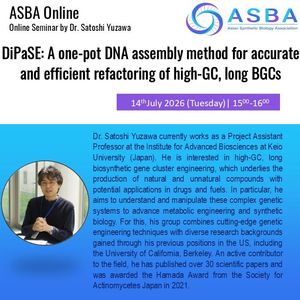
Dr. Satoshi Yuzawa currently works as a Project Assistant Professor at the Institute for Advanced Biosciences at Keio University (Japan). He is interested in high-GC, long biosynthetic gene cluster engineering, which underlies the production of natural and unnatural compounds with potential applications in drugs and fuels. In particular, he aims to understand and manipulate these complex genetic systems to advance metabolic engineering and synthetic biology. For this, his group combines cutting-edge genetic engineering techniques with diverse research backgrounds gained through his previous positions in the US, including the University of California, Berkeley. An active contributor to the field, he has published over 30 scientific papers and was awarded the Hamada Award from the Society for Actinomycetes Japan in 2021.
