

 2
2 0
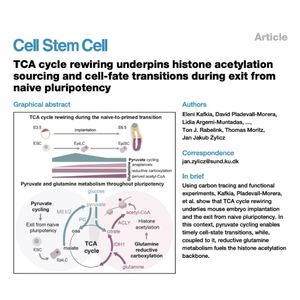
0This research identifies a sophisticated metabolic rewiring that occurs during the transition from naive to primed pluripotency in mouse embryos and stem cells. Rather than a simple reduction in mitochondrial activity, the studies reveal that pyruvate cycling and reductive glutamine metabolism are essential for maintaining developmental progression and cell-state transitions. Pyruvate acts as a central node where specific enzyme activities create a cyclical carbon flow that enables a timely exit from naive pluripotency. Unexpectedly, glutamine—rather than glucose—emerges as the primary carbon source fueling histone acetylation, which is a critical epigenetic modification for embryo implantation. The findings demonstrate that this specialized nutrient utilization program directly sustains epigenome remodeling and lineage differentiation. By integrating carbon tracing and functional experiments, the authors highlight how these coordinated metabolic shifts link nutrient usage to the regulatory mechanisms governing early mammalian development.
References:
Kafkia E, Pladevall-Morera D, Argemi-Muntadas L, et al. TCA cycle rewiring underpins histone acetylation sourcing and cell-fate transitions during exit from naive pluripotency[J]. Cell Stem Cell, 2026, 33(5): 820-836. e9.
