

 1
1 0
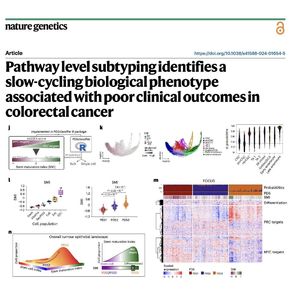
0This study introduces a novel classification system for colorectal cancer called Pathway-Derived Subtypes (PDS), which categorizes tumors based on biological activity rather than traditional gene-level data. The researchers identified three distinct groups: PDS1, which is highly proliferative and has a positive prognosis; PDS2, which is characterized by high immune and stromal activity; and PDS3, a newly discovered slow-cycling phenotype. Despite lacking unique histological patterns, PDS3 tumors demonstrate the worst clinical outcomes in locally advanced disease and are notably absent of common stem cell markers. This new framework reveals significant diversity within the previously uniform CMS2 category, uncovering hidden biological states that influence how tumors develop and respond to treatment. To support further discovery, the authors provided the PDSclassifier R package and an interactive web platform for the scientific community. These findings emphasize that higher-level pathway analysis can expose critical clinical risks that standard genetic screening might overlook.
References:
Malla S B, Byrne R M, Lafarge M W, et al. Pathway level subtyping identifies a slow-cycling biological phenotype associated with poor clinical outcomes in colorectal cancer[J]. Nature Genetics, 2024, 56(3): 458-472.
