

 0
0 0
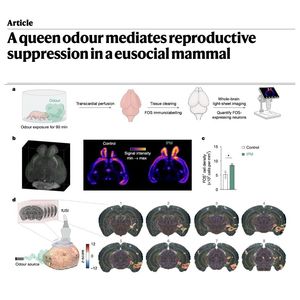
0Recent research has identified isopropyl myristate (IPM) as a critical chemical signal that maintains the social and reproductive hierarchy in naked mole-rat colonies. This unique ester is produced almost exclusively by queens, with levels peaking during ovulation and becoming nearly undetectable in subordinate members. The compound is detected through olfactory pathways, triggering physiological changes such as elevated prolactin and suppressed progesterone to inhibit fertility in non-breeding females. Experimental application of IPM to colonies without a queen successfully prevented reproductive succession and stabilized social order, while its removal sparked aggression and competition for dominance. Furthermore, the presence of IPM in other social mole-rat species suggests that this chemical-mediated suppression is a fundamental mechanism of mammalian eusociality, mirroring the pheromonal control seen in social insects like bees and ants.
References:
Khallaf M A, Hart D W, Luo W, et al. A queen odour mediates reproductive suppression in a eusocial mammal[J]. Nature, 2026: 1-9.
