

 6
 0
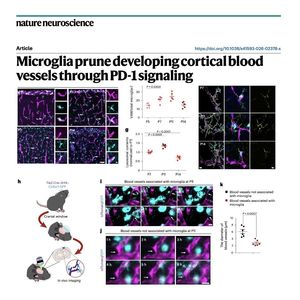
The article explores the biological mechanisms behind cerebrovascular pruning, the process by which redundant blood vessels are removed to refine the brain's vascular network. Scientists discovered that microglia, typically known for immune defense and synaptic maintenance, directly facilitate this remodeling by physically interacting with and eliminating unnecessary cortical capillaries. This specialized activity is primarily governed by the PD-L1–PD-1 signaling axis, which regulates microglial phagocytic capacity and their ability to target specific vessels. Experiments revealed that a deficiency in PD-1 receptors disrupts this pruning process, leading to an overabundance of vascular branches and impaired network formation. Furthermore, the study identifies that the secretion of CD5L protein helps instruct these cells to locate and refine the developing vasculature. Ultimately, the findings establish a critical link between immune checkpoint molecules and the structural maturation of the brain's circulatory system.
References:
Zhang M, Wang Y, Yang R, et al. Microglia prune developing cortical blood vessels through PD-1 signaling[J]. Nature Neuroscience, 2026: 1-14.
