

 0
0 0
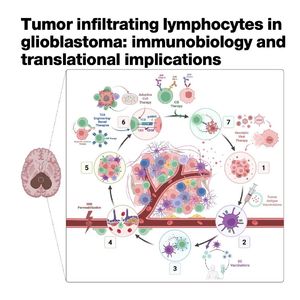
0The research examines the immunobiology of glioblastoma (GBM) and explains why standard immunotherapies often fail to treat this aggressive brain tumor. While common animal models show high levels of exhausted T cells, human patients actually possess a different landscape dominated by GZMK⁺ T cells and very low mutation rates. This low tumor mutational burden results in minimal antigen stimulation, making it difficult for the immune system to recognize and attack the cancer naturally. The authors describe the brain tumor immunity cycle to pinpoint exactly where immune responses break down within the central nervous system. By identifying these specific hurdles, the paper suggests that personalized TCR-based therapies and neoantigen vaccines may be more effective than traditional checkpoint inhibitors. Ultimately, the source advocates for rational immunotherapy design tailored to the unique, "cold" environment of human glioblastoma.
References:
Hill C M, Nwagwu C D, Odukoya A O, et al. Tumor infiltrating lymphocytes in glioblastoma: immunobiology and translational implications[J]. npj Precision Oncology, 2026, 10(1): 274.
