

 0
0 0
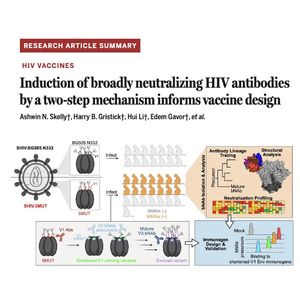
0The research details the development of an innovative animal model using rhesus macaques to overcome the long-standing challenge of inducing broadly neutralizing antibodies (bNAbs) against HIV-1. By infecting the monkeys with a specifically engineered virus called SHIV.5MUT, researchers successfully triggered a two-step immune response that rapidly produced potent antibodies targeting the V3-glycan site of the viral envelope. This process begins when initial antibodies force the virus to evolve shortened V1 loops, which inadvertently exposes critical hidden targets to the immune system. The resulting antibodies in macaques were found to be structurally and genetically similar to those found in rare, naturally protected human patients. These findings provide a vital molecular blueprint for designing next- generation vaccines that can more effectively train the human immune system to combat HIV. By identifying the exact viral mutations that drive antibody maturation, this research offers a benchmark for future clinical trials and therapeutic strategies.
References:
Skelly A N, Gristick H B, Li H, et al. Induction of broadly neutralizing HIV antibodies by a two-step mechanism informs vaccine design[J]. Science, 2026, 392(6804): eaec6396.
