

 0
0 0
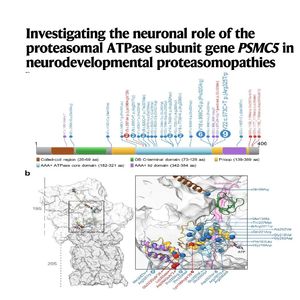
0This research identifies PSMC5 as a critical gene responsible for a specific class of neurodevelopmental proteasomopathies. By studying 44 individuals, scientists discovered that mutations in this proteasome subunit lead to syndromic conditions characterized by intellectual disability, impaired motor skills, and distinct facial features. Experimental models using Drosophila and rat neurons reveal that these genetic variants disrupt protein homeostasis, causing toxic cellular accumulation and shifting the balance of brain signaling. Furthermore, the study demonstrates that proteasome dysfunction triggers chronic inflammation through the integrated stress response and a sterile type I interferon signature. These findings establish a clear link between defective protein degradation and significant impairments in early neural progenitor cell development. Evidence suggests that targeting specific stress kinases may offer a viable therapeutic pathway for treating these complex developmental disorders.
References:
Küry S, Stanton J E, van Woerden G M, et al. Investigating the neuronal role of the proteasomal ATPase subunit gene PSMC5 in neurodevelopmental proteasomopathies[J]. Nature communications, 2025, 16(1): 10545.
