

 0
0 0
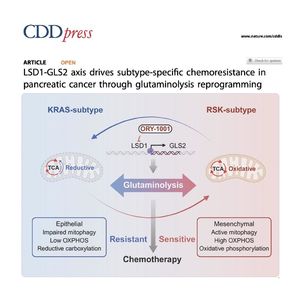
0This research identifies lysine-specific demethylase 1 (LSD1) as a pivotal metabolic regulator that dictates how pancreatic cancer cells respond to chemotherapy based on their molecular subtype. The study demonstrates that inhibiting LSD1 sensitizes RSK-subtype cells, which rely on healthy mitochondrial respiration, while paradoxically inducing resistance in KRAS-subtype cells characterized by mitochondrial dysfunction and defective mitophagy. Mechanistically, LSD1 represses the enzyme GLS2, acting as a transcriptional switch that governs glutamine metabolism. In RSK-subtype tumors, this axis promotes oxidative metabolism, whereas in KRAS-subtype tumors, it drives a bypass through reductive carboxylation to sustain survival. These findings, validated in both cell lines and organoid models, emphasize that mitochondrial fitness is the primary determinant of therapeutic success. Ultimately, the authors propose a framework for precision medicine that requires stratifying patients by metabolic subtype before administering LSD1 inhibitors.
References:
Wang Z, Huang Q, Zhao J, et al. LSD1-GLS2 axis drives subtype-specific chemoresistance in pancreatic cancer through glutaminolysis reprogramming[J]. Cell Death & Disease, 2026, 17(1): 649.
