

 0
0 0
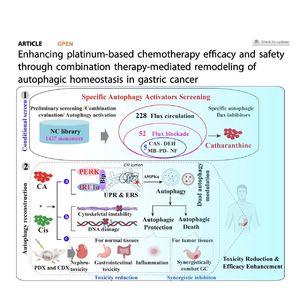
0This research explores a novel therapeutic strategy to optimize gastric cancer treatment by combining the chemotherapy drug Cisplatin with a natural compound called Catharanthine. The study identifies that this combination effectively remodels autophagic homeostasis, creating a dual effect that improves both safety and efficacy. In tumor cells, the treatment induces destructive autophagy and cytoskeletal collapse, which overcomes drug resistance and promotes cell death. Conversely, it activates protective autophagy in normal tissues, significantly reducing the severe organ toxicity and systemic side effects typically caused by platinum-based drugs. By balancing these "protective" and "destructive" roles of autophagy, the findings provide a theoretical foundation for more effective and less toxic chemotherapy regimens.
References:
Pan G, Xu Q, Zhang K, et al. Enhancing platinum-based chemotherapy efficacy and safety through combination therapy-mediated remodeling of autophagic homeostasis in gastric cancer[J]. Cell Death & Disease, 2026.
