

 0
0 0
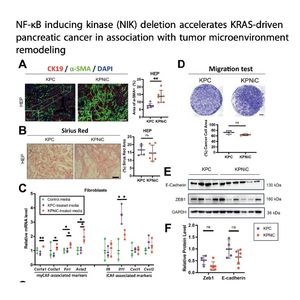
0This research article investigates the role of NF-κB-inducing kinase (NIK) in the development and progression of pancreatic ductal adenocarcinoma (PDAC). Using genetically engineered mouse models, the study reveals that deleting NIK accelerates tumor formation and reduces overall survival, identifying it as a surprising tumor suppressor in the context of oncogenic KRAS. The absence of NIK leads to elevated ERK signaling and increased cell proliferation while protecting early-stage cells from injury-induced death. Furthermore, NIK loss triggers significant remodeling of the tumor microenvironment, promoting a fibrotic state characterized by activated myofibroblasts and increased neutrophil infiltration. These findings are supported by human data showing that low NIK expression correlates with poor patient outcomes, suggesting that maintaining balanced NF-κB pathway activity is essential for restraining pancreatic cancer.
References:
Du Z, Büttner U F G, Wirth H L, et al. NF-κB inducing kinase (NIK) deletion accelerates KRAS-driven pancreatic cancer in association with tumor microenvironment remodeling[J]. Cell Death & Disease, 2026, 17(1): 513.
