

 0
0 0
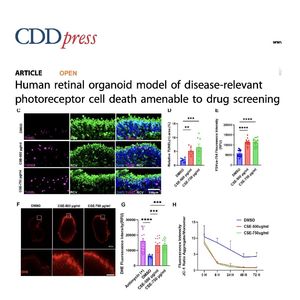
0The research article describes the development of a human retinal organoid model used to study the mechanisms of photoreceptor cell death in dry age-related macular degeneration (AMD). By exposing these lab-grown tissues to cigarette smoke extract, researchers successfully replicated the oxidative stress, mitochondrial damage, and specific cell death pathways, such as apoptosis and ferroptosis, seen in human patients. This innovative platform allows for proteomic profiling and real-time monitoring of retinal health, filling a critical gap in the study of early-stage vision loss. Ultimately, the model serves as a robust drug-screening tool to evaluate new therapies aimed at preserving eyesight. These findings offer a scalable, human-specific alternative to animal testing for accelerating the discovery of dry AMD treatments.
References:
Parween S, Saviola A J, Howell A C, et al. Human retinal organoid model of disease-relevant photoreceptor cell death amenable to drug screening[J]. Cell Death & Disease, 2026.
