

 0
0 0
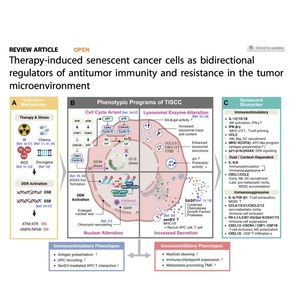
0This review article from Springer Nature examines the complex, dual influence of therapy-induced senescent cancer cells (TISCCs) on the tumor microenvironment. While traditional treatments like chemotherapy and radiation often force cancer cells into a non-proliferative state, these senescent cells remain metabolically active and act as bidirectional regulators of the immune system. Initially, TISCCs can boost antitumor immunity by increasing antigen presentation and recruiting innate immune cells through a secretome known as SASP. However, persistent senescence eventually fosters therapeutic resistance by creating an immunosuppressive landscape characterized by T-cell exhaustion and immune checkpoint activation. To address these conflicting roles, the authors propose a time-aware therapeutic framework that strategically sequences vaccines, senomorphics, and senolytics. This clinical strategy aims to maximize the early immunogenic benefits of senescence while eliminating the long-term risks of tumor recurrence and metastasis.
References:
Choi M, Lee D, Yang W H, et al. Therapy-induced senescent cancer cells as bidirectional regulators of antitumor immunity and resistance in the tumor microenvironment[J]. Cell Death & Disease, 2026.
