

 0
0 0
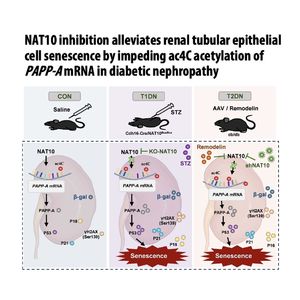
0Recent research identifies NAT10 as a major driver of renal tubular epithelial cell senescence in patients suffering from diabetic nephropathy (DN). The studies demonstrate that high levels of this enzyme lead to increased ac4C acetylation, which stabilizes PAPP-A mRNA and triggers aging pathways involving the p53 protein. Experimental evidence from both type 1 and type 2 diabetes mouse models shows that inhibiting NAT10—either through genetic knockout or the pharmacological agent Remodelin—effectively reduces kidney damage and cellular aging. These findings highlight the NAT10/PAPP-A/p53 axis as a critical mechanistic link in the progression of diabetic kidney disease. Ultimately, the data suggests that targeting this specific epigenetic modification offers a promising therapeutic strategy to preserve kidney function.
References:
Hu M, Lv L, Li R, et al. NAT10 inhibition alleviates renal tubular epithelial cell senescence by impeding ac4C acetylation of PAPP-A mRNA in diabetic nephropathy[J]. Cell Death & Disease, 2026.
