

 0
0 0
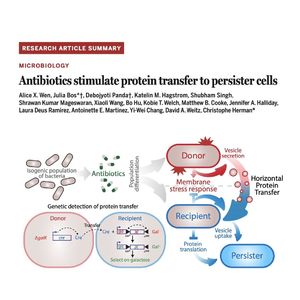
0This research article identifies a novel method of horizontal protein transfer where bacteria exchange functional proteins via membrane vesicles to survive antibiotic stress. Researchers developed a Cre-loxP genetic system to track these events, discovering that antibiotics trigger a population to split into vesicle-producing donors and protein-receiving recipients. This exchange is driven by the Psp membrane stress response, which regulates both the secretion of these protein-filled particles and their subsequent uptake. The study highlights that recipient cells often exist in a state of antibiotic persistence, characterized by suppressed protein synthesis and enhanced survival capabilities. Ultimately, the acquisition of neighboring proteins through this mechanism significantly boosts the antibiotic tolerance of the surviving bacteria. These findings suggest that blocking this transfer process could provide a new pathway for eliminating persistent bacterial infections.
References:
Wen A X, Bos J, Panda D, et al. Antibiotics stimulate protein transfer to persister cells[J]. Science, 2026, 392(6805): eadx3972.
