

 0
0 0
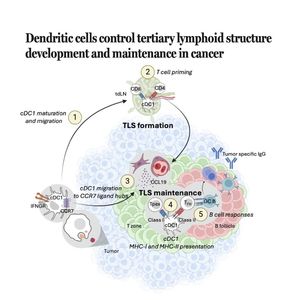
0The research article examines how mature type 1 conventional dendritic cells (cDC1s) act as the primary architects and keepers of tertiary lymphoid structures (TLSs) in cancerous environments. Using advanced spatial transcriptomics and mouse models, the study demonstrates that these immune cells undergo IFN-γ-driven maturation to initiate the early formation of lymphoid aggregates. As tumors advance, mature cDC1s migrate into specific stromal hubs within the tumor to maintain the structural integrity and functionality of the TLS. The researchers established that antigen presentation to both CD4+ and CD8+ T cells is vital for sustaining germinal centers and producing tumor-specific antibodies. Ultimately, the presence of these dendritic cells and well-maintained TLSs is linked to improved survival and better responses to immunotherapy in human patients. Therapeutic strategies designed to activate or expand these specific dendritic cells could therefore significantly boost antitumor immunity.
References:
Mattiuz R, Boumelha J, Aerakis E, et al. Dendritic cells control tertiary lymphoid structure development and maintenance in cancer[J]. Science, 2026, 393(6808): eady1678.
