

 0
0 0
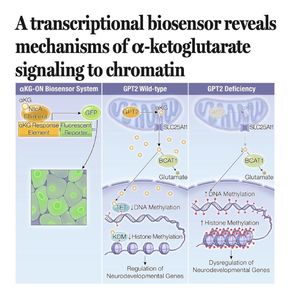
0The research article describes the creation of a transcriptional biosensor designed to monitor α-ketoglutarate (αKG) levels within the cell nucleus. This tool allowed researchers to identify a specific mitochondrion-to-nucleus pathway where the GPT2 enzyme and SLC25A11 transporter work together to supply the αKG necessary for chromatin demethylation. The study demonstrates that a deficiency in GPT2 leads to chromatin hypermethylation and the disruption of vital neurodevelopmental genes. By using a mouse model, the authors proved that αKG supplementation can reverse these epigenetic defects and improve health. Ultimately, the research establishes a direct link between compartmentalized metabolism and the regulation of the epigenome in both health and disease.
References:
Sternisha A C, Li H, Gajendra K, et al. A transcriptional biosensor reveals mechanisms of α-ketoglutarate signaling to chromatin[J]. Science, 2026, 393(6808): eadx8675.
