

 0
0 0
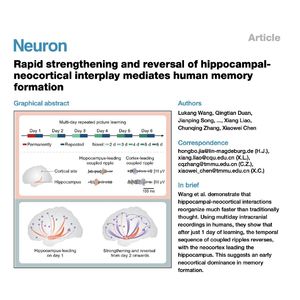
0This scientific research investigates the spatiotemporal dynamics of human memory formation by tracking neural activity over a multi-day learning process. Using intracranial recordings, researchers observed that high-frequency electrical bursts known as ripples significantly increase in both the hippocampus and neocortex as subjects memorize images. A pivotal discovery is that the communication between these brain regions reorganizes much faster than traditional theories suggest. While the hippocampus initially leads during the first day of encoding, the neocortex assumes a dominant, leading role by the second day. This rapid reversal of information flow indicates that the neocortex takes an early leadership position in stabilizing and retrieving long-term memories. Ultimately, the study identifies these coordinated ripple interactions as a fundamental biomarker for how the human brain builds and accesses lasting knowledge.
References:
Wang L, Duan Q, Song J, et al. Rapid strengthening and reversal of hippocampal-neocortical interplay mediates human memory formation[J]. Neuron, 2026.
