

 0
0 0
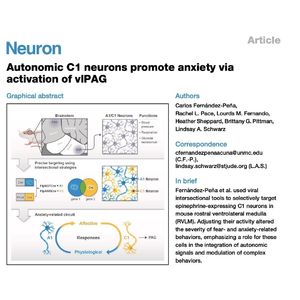
0This research explores the neurological foundations of anxiety by identifying a specific group of brainstem cells, known as C1 neurons, that bridge physiological stress and emotional behavior. Using sophisticated intersectional viral tools to isolate these cells from their neighbors, scientists discovered that stimulating C1 neurons directly triggers anxiety-like actions and aversive responses in mice. These neurons function by activating excitatory cells in the ventrolateral periaqueductal gray (vlPAG), a brain region critical for processing threats and defensive freezing. The study demonstrates that C1 activity spikes during stressful encounters, while suppressing these neurons effectively reduces fear and prevents the escalation of pathological anxiety. By uncovering this "brain-body hub," the findings suggest that targeting this specific circuit could lead to more precise therapeutic treatments for human anxiety disorders. This work highlights how autonomic signals from the medulla are integrated into complex emotional states that can persist long after a threat has vanished.
References:
Fernández-Peña C, Pace R L, Fernando L M, et al. Autonomic C1 neurons promote anxiety via activation of vlPAG[J]. Neuron, 2026.
