

 0
0 0
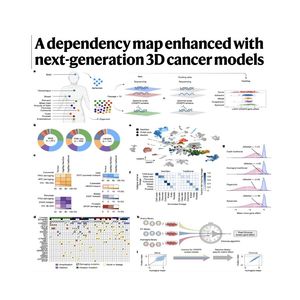
0The paper describes the development and integration of Next-Generation (NextGen) cancer models, such as 3D organoids and spheroids, into the Cancer Dependency Map (DepMap). By conducting 147 genome-scale CRISPR screens and extensive multi-omic profiling, researchers found that these 3D models more accurately represent patient tumor lineages and genetic diversity than traditional 2D cell lines. These advanced models preserve critical gene expression programs, including glial states in brain cancer and mucinous differentiation in gastrointestinal tumors, which are often lost in conventional cultures. This increased fidelity allowed for the discovery of new biomarker-linked vulnerabilities, such as a specific reliance on CDK6 in certain brain tumors and SCD in KRAS-amplified cancers. Furthermore, the study highlights how different growth formats and nutrient environments significantly influence gene essentiality and therapeutic response. Ultimately, this integrated dataset serves as an expansive public resource designed to accelerate the discovery of personalized cancer treatments.
References:
Neiswender J V, Maffa S, Brenan L, et al. A dependency map enhanced with next-generation 3D cancer models[J]. Nature, 2026: 1-11.
