

 0
0 0
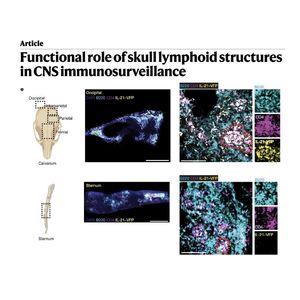
0Recent research establishes that the skull bone marrow serves as a specialized site for immunosurveillance of the central nervous system. Scientists identified unique lymphoid structures within the skull that contain germinal-center-like formations, where follicular helper T cells coordinate with B cells to mount immune responses. These structures are directly connected to the brain via microscopic channels, allowing them to detect and respond to CNS-derived antigens and even brain tumors. Crucially, this local immune activity can occur independently of traditional secondary lymphoid organs like the spleen or lymph nodes. The findings suggest that the skull acts as a primary neurological immune hub, potentially influencing how the body manages a wide range of neurological diseases. This discovery redefines our understanding of the anatomical relationship between the brain and the peripheral immune system.
References:
Park J H, Abramishvili D, Davanzo G G, et al. Functional role of skull lymphoid structures in CNS immunosurveillance[J]. Nature, 2026: 1-9.
