

 0
0 0
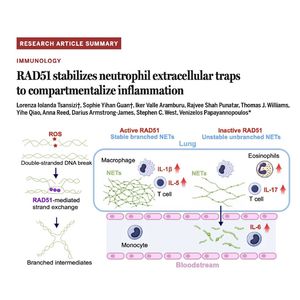
0The paper detail a scientific study identifying the protein RAD51 as a critical regulator of neutrophil extracellular traps (NETs), which are weblike DNA structures used by the immune system to capture pathogens. While RAD51 is typically known for repairing DNA breaks, researchers discovered it creates branched chromatin junctions that physically stabilize NETs, keeping inflammation localized within infected tissues like the lungs. When RAD51 is inhibited, these structures become unstable and break down prematurely, allowing proinflammatory DNA fragments to enter the bloodstream. This systemic leakage triggers monocytes to produce interleukin-6 (IL-6), which shifts the immune response toward a harmful, overactive state characterized by eosinophilia and airway obstruction. By establishing a link between DNA repair mechanisms and immune spatial control, the study suggests that targeting NET architecture could offer new ways to manage inflammatory diseases and asthma.
References:
Tsansizi L I, Guan S Y, Aramburu I V, et al. RAD51 stabilizes neutrophil extracellular traps to compartmentalize inflammation[J]. Science, 2026, 393(6813): eaed9286.
