

 1
1 0
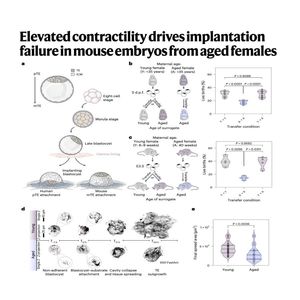
0New research identifies a mechanical cause for the sharp decline in fertility observed in females of advanced maternal age. By utilizing mouse models to simulate human reproductive aging, scientists discovered that embryos from older females exhibit excessive cellular contractility, which increases tissue surface tension and hinders successful uterine implantation. This hypercontractility was proven to be the primary driver of failure, as activating contractility in young embryos replicated the defect, while inhibiting it in aged embryos restored their ability to spread and implant. The study challenges previous assumptions that uterine aging is the main obstacle, instead placing the origin of infertility within the mechanical competence of the embryo itself. Furthermore, these findings suggest that non-invasive imaging of embryo mechanics could serve as a valuable diagnostic tool to improve success rates in in vitro fertilization (IVF) clinical settings. This work establishes embryo biophysics as a critical regulator of reproductive longevity across species.
References:
Cavanaugh K E, Franco-Oñate M J, Horsley N, et al. Elevated contractility drives implantation failure in mouse embryos from aged females[J]. Nature Cell Biology, 2026: 1-15.
