

 0
0 0
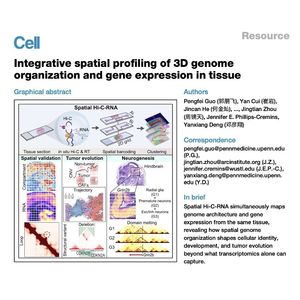
0The paper introduce Spatial Hi-C-RNA, a pioneering multimodal platform designed to simultaneously map 3D genome architecture and gene expression within intact tissue sections. By integrating microfluidic barcoding with high-throughput chromatin capture and RNA sequencing, researchers can now observe how the spatial folding of DNA relates to transcriptional activity at near-single-cell resolution. The study demonstrates the technology's effectiveness across various biological systems, including the mouse brain, developing embryos, and human melanoma. Notably, the platform reveals intratumoral heterogeneity and developmental remodeling that transcriptomics alone cannot detect, linking physical genome structure to cellular identity. These findings offer a comprehensive framework for investigating how chromatin organization governs biological function in both health and disease. This integrative approach preserves the vital spatial context necessary for understanding complex regulatory programs in their native environments.
References:
Guo P, Cui Y, He J, et al. Integrative spatial profiling of 3D genome organization and gene expression in tissue[J]. Cell, 2026.
