

 0
0 0
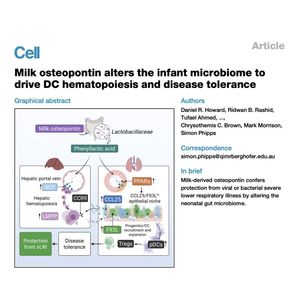
0The paper details a scientific study published in the journal Cell regarding how milk-derived osteopontin (OPN) protects infants from severe respiratory infections. The researchers discovered that OPN facilitates healthy immune system development by fostering a specific gut microbiome composition, notably increasing Lactobacillaceae and the metabolite 3-phenyllactic acid (PLA). This process triggers the recruitment of dendritic cell progenitors from the liver to the lungs, establishing a protective local immune niche. When OPN is missing, neonates suffer from impaired hematopoiesis, leaving them highly vulnerable to viral and bacterial pneumonia. Supplementing with PLA or PPARγ agonists was shown to restore these immune defenses and provide long-term disease tolerance. Ultimately, the source elucidates a critical gut-lung axis mechanism by which breastfeeding ensures neonatal respiratory health.
References:
Howard D R, Rashid R B, Ahmed T, et al. Milk osteopontin alters the infant microbiome to drive DC hematopoiesis and disease tolerance[J]. Cell, 2026.
