

 1
1 0
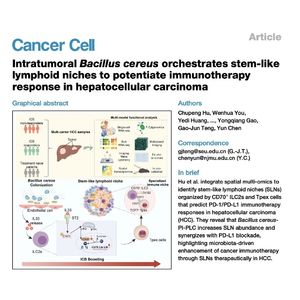
0Researchers have identified a specialized immune environment in hepatocellular carcinoma called stem-like lymphoid niches (SLNs), which are primary predictors of successful immunotherapy outcomes. These unique structures are defined by the spatial interaction between CD70+ type 2 innate lymphoid cells (ILC2s) and progenitor exhausted T (Tpex) cells, which maintain the immune system's ability to fight tumors. The study reveals that the bacteria Bacillus cereus plays a crucial role by secreting PI-PLC, an enzyme that triggers the release of the cytokine IL-33 from blood vessel cells. This signaling pathway promotes the accumulation of SLNs through metabolic and epigenetic reprogramming of ILC2s, enhancing their organizing function. Crucially, combining PI-PLC or IL-33 with αPD-L1 checkpoint inhibitors significantly boosts the body's anti-tumor response in experimental models. These findings suggest that the intratumoral microbiota can be leveraged to engineer more effective immune environments for treating liver cancer.
References:
Hu C, You W, Huang Y, et al. Intratumoral Bacillus cereus orchestrates stem-like lymphoid niches to potentiate immunotherapy response in hepatocellular carcinoma[J]. Cancer Cell, 2026.
