

 1
1 0
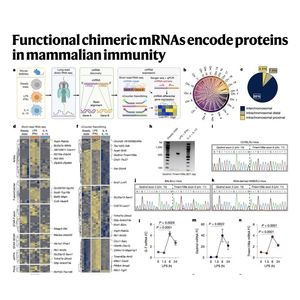
0The paper describe the discovery and functional characterization of chimeric mRNAs (chRNAs), which are formed by fusing exons from distinct genes. Researchers utilized a sophisticated pipeline involving long-read RNA sequencing to identify thousands of these hybrid transcripts in mammalian macrophages during inflammation. A primary finding is the Gsdmd-Tmem106a chimera, a protein-coding fusion that is dynamically regulated by CTCF-dependent chromosomal interactions. This novel protein localizes to the plasma membrane, where it physically interacts with canonical GSDMD to accelerate the formation of pores and the release of inflammatory cytokines. Functionally, this process balances host defense against bacterial infection with the risks of lethal sepsis immunopathology. Ultimately, the study establishes that trans-splicing serves as a vital mechanism for expanding the mammalian proteome beyond traditional genomic boundaries.
References:
Venezia O, Kane H, Du G, et al. Functional chimeric mRNAs encode proteins in mammalian immunity[J]. Nature, 2026: 1-10.
