

 0
0 0
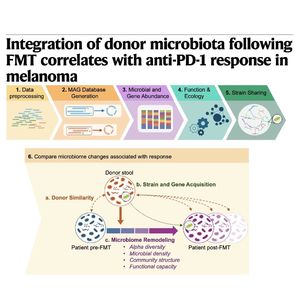
0A meta-analysis of three clinical trials reveals that the success of fecal microbiota transplantation (FMT) in boosting melanoma immunotherapy depends on stable donor strain integration rather than simple bacterial diversity. Researchers discovered that patients who responded to anti-PD-1 therapy exhibited resilient gut communities that successfully adopted donor microbes and enriched metabolic pathways. In contrast, non-responders experienced significant microbial load fluctuations and an increase in pro-inflammatory pathobionts following the transplant. These ecological shifts in the gut were directly linked to immune system remodeling within the tumor microenvironment, specifically increasing CD8+ T cell activity. Ultimately, the study suggests that achieving a stable community transition is more critical for therapeutic efficacy than the presence of any single "beneficial" bacterial species.
References:
Fessler J L, Olm M R, Engleman E G, et al. Integration of donor microbiota following FMT correlates with anti-PD-1 response in melanoma[J]. Nature Communications, 2026.
