

 0
0 0
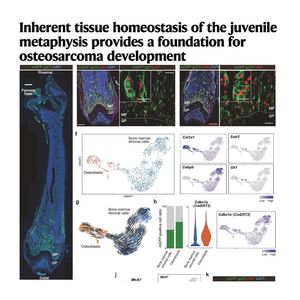
0This research identifies juvenile metaphyseal tissue homeostasis as the biological foundation for the specific age of onset and anatomical location of osteosarcomas. By utilizing single-cell RNA sequencing and a p21 reporter mouse model, the authors discovered that young bone cells experience replication-associated DNA damage during peak growth. This inherent stress triggers a p53-mediated checkpoint that normally suppresses cancer, yet the presence of Hedgehog signaling from the growth plate keeps these immature cells in a proliferative state. The study demonstrates that c-Myc amplification enhances this proliferation, while the subsequent inactivation of p53 allows these cells to bypass growth limits and transform into metastatic bone tumors. Ultimately, the findings reveal how the unique environment of developing long bones creates a temporal window of vulnerability to oncogenic mutations.
References:
Saito M, Nakasuka F, Sankoda N, et al. Inherent tissue homeostasis of the juvenile metaphysis provides a foundation for osteosarcoma development[J]. Nature Communications, 2026, 17: 6241.
