

 0
0 0
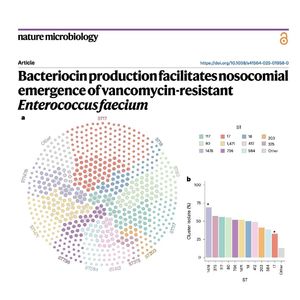
0This research article investigates the global and local rise of specific vancomycin-resistant Enterococcus faecium (VREfm) lineages within healthcare settings. By analyzing thousands of genomes from 2002 to 2022, researchers discovered that older strains are being systematically replaced by emergent lineages such as ST80 and ST117. The study identifies a key driver of this shift: a specific bacteriocin called T8, an antimicrobial peptide that allows these newer strains to eliminate competing bacteria. Laboratory tests and animal models confirmed that producing bacteriocin T8 provides a significant competitive advantage during gut colonization. The authors conclude that this biochemical warfare facilitates the persistence and spread of multidrug-resistant pathogens in hospitals. These findings suggest that the evolution of bacteriocin-mediated competition is a primary factor in the shifting landscape of hospital-acquired infections.
References:
Mills E G, Hewlett K, Smith A B, et al. Bacteriocin production facilitates nosocomial emergence of vancomycin-resistant Enterococcus faecium[J]. Nature Microbiology, 2025, 10(4): 871-881.
