

 0
0 0
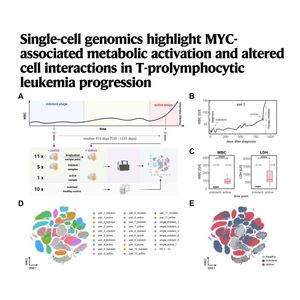
0This study utilizes single-cell genomics and whole genome sequencing to investigate the molecular evolution of T-prolymphocytic leukemia (T-PLL) as it transitions from an indolent to an active stage. By analyzing longitudinal patient samples, researchers identified that disease progression is driven by the upregulation of MYC-target gene signatures and a significant increase in energy metabolism, specifically oxidative phosphorylation and glycolysis. The findings also highlight a loss of T-cell receptor signaling importance and a reduction in interactions with the tumor microenvironment, suggesting that leukemic cells gain autonomy from external growth signals. Furthermore, the data point toward the clonal expansion of ATM-deficient cells and the accumulation of MYC copy number gains as key genomic events. Ultimately, this research provides a comprehensive transcriptomic atlas that reveals shared mechanisms of tumor evolution, offering potential new avenues for targeted therapeutic interventions in an otherwise treatment-resistant cancer.
References:
Wahnschaffe L, Jungherz D, Müller T A, et al. Single-cell genomics highlight MYC-associated metabolic activation and altered cell interactions in T-prolymphocytic leukemia progression[J]. Nature Communications, 2026, 17(1): 2319.
