

 0
0 0
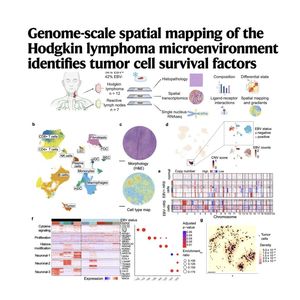
0The research article explores the cellular and spatial landscape of classic Hodgkin lymphoma (cHL) using advanced genomic mapping and single-cell sequencing. Researchers identified a unique microenvironmental niche where malignant cells cluster with specific helper T cells and myeloid cells while excluding others, such as plasma cells. This analysis discovered that interleukin-13 (IL13) is a critical factor derived from the surroundings that sustains the survival of tumor cells. Laboratory experiments confirmed that blocking IL13 signaling through FDA-approved antibodies effectively inhibits cancer cell growth. The study suggests that targeting this specific signaling pathway offers a promising new therapeutic strategy for patients with Hodgkin lymphoma. Ultimately, this work provides a comprehensive spatial reference for understanding how the tumor microenvironment fosters cancer progression and immune evasion.
References:
Shanmugam V, Tokcan N, Chafamo D, et al. Genome-scale spatial mapping of the Hodgkin lymphoma microenvironment identifies tumor cell survival factors[J]. Nature communications, 2025, 17(1): 838.
