

 0
0 0
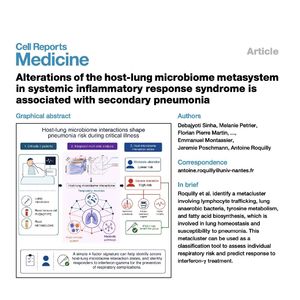
0Research published in Cell Reports Medicine identifies a dynamic metasystem in critically ill patients, where the respiratory microbiome, blood metabolome, and immune cell phenotypes interact to influence health. By analyzing longitudinal data, scientists discovered a specific metacluster—characterized by markers like tyrosine metabolism and B-cell trafficking—that dictates a patient’s susceptibility to secondary pneumonia and death. To make these complex findings clinically useful, the authors developed a 4-factor signature that categorizes patients into moderate or severe alteration states. This classification tool successfully predicts respiratory complications and helps identify which individuals are likely to benefit from interferon-gamma immunotherapy. Ultimately, the study demonstrates that monitoring these host-microbe interactions can provide a personalized approach to managing systemic inflammatory response syndrome.
References:
Sinha D, Petrier M, Martin F P, et al. Alterations of the host-lung microbiome metasystem in systemic inflammatory response syndrome is associated with secondary pneumonia[J]. Cell Reports Medicine, 2026.
