

 0
0 0
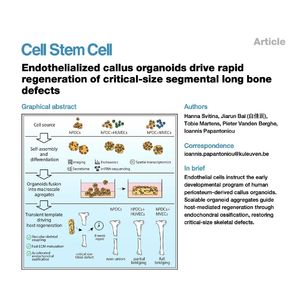
0This research introduces human endothelialized callus organoids (hECOs) as a novel method for repairing large, non-healing bone injuries. By combining periosteum-derived skeletal progenitors with endothelial cells, the authors successfully mimicked the complex cellular environment of a natural fracture callus. These organoids demonstrated accelerated chondrogenic differentiation and enhanced extracellular matrix maturation through critical molecular signaling between cell types. When fused into macroscale aggregates and implanted into mice, the constructs facilitated rapid host vascularization and achieved complete bridging of critical-size tibial defects. The study suggests that these self-assembled, scaffold-free structures function as transient biological templates that guide the body's own regenerative processes. Ultimately, this approach offers a promising developmental engineering strategy for restoring functional bone in complex clinical cases.
References:
Svitina H, Bai J, Martens T, et al. Endothelialized callus organoids drive rapid regeneration of critical-size segmental long bone defects[J]. Cell Stem Cell, 2026.
