

 1
1 0
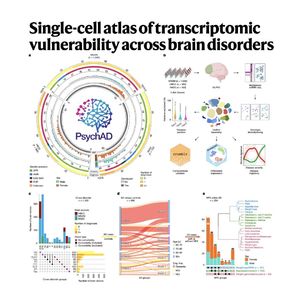
0The paper describes the PsychAD cohort, a massive single-nucleus transcriptomic study of the human dorsolateral prefrontal cortex involving over 6.3 million nuclei from 1,494 donors. This research creates a comprehensive cellular atlas to identify how gene expression changes across eight different neurodegenerative and neuropsychiatric disorders, such as Alzheimer’s and schizophrenia. By establishing a unified cellular taxonomy, the study reveals universal molecular signatures shared across diseases, such as disruptions in protein localization and mRNA processing. It further distinguishes disease-specific patterns, showing that neurodegenerative conditions primarily impact glial and vascular cells, while psychiatric disorders are more closely linked to neuronal variation. Additionally, the sources detail how individual genetic backgrounds and specific disease trajectories, like those in Alzheimer’s, drive distinct cellular shifts in the brain's complex ecosystem. This resource ultimately provides a framework for understanding transcriptomic vulnerability and identifying new targets for medical intervention.
References:
Lee D, Koutrouli M, Masse N Y, et al. Single-cell atlas of transcriptomic vulnerability across brain disorders[J]. Nature, 2026, 657(8133): 988-1002.
