

 0
0 0
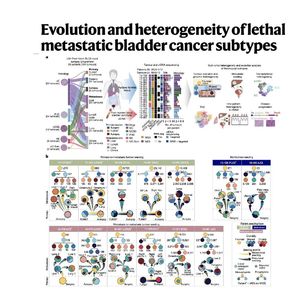
0The paper discuss a comprehensive study by the University of Washington and Fred Hutchinson Cancer Center detailing the evolutionary trajectories, genetic diversity, and metastatic spread of terminal bladder cancer. By analyzing tissue samples and genomic data from a rapid autopsy program, researchers discovered that metastasis-to-metastasis seeding acts as the primary mechanism for cancer dissemination. The investigation reveals that polyclonal migration strongly correlates with accelerated disease mortality and poorer patient prognosis. Furthermore, distinct histological subtypes such as plasmacytoid and neuroendocrine variants display unique genomic alterations and survival rates compared to conventional urothelial carcinomas. Ultimately, evaluating post-mortem cell-free DNA provides a promising, non-invasive method to assess tumor aggression, heterogeneity, and distinct molecular identities.
References:
Itagi P, Schuster S L, Arora S, et al. Evolution and heterogeneity of lethal metastatic bladder cancer subtypes[J]. Nature, 2026: 1-12.
