

 0
 0
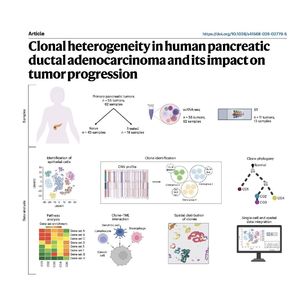
The research investigates the clonal heterogeneity, transcriptional plasticity, and tumor microenvironment (TME) interactions of human pancreatic ductal adenocarcinoma (PDAC) using single-cell RNA sequencing and spatial transcriptomics across a large cohort of primary tumors. The analysis reveals that individual tumors harbor multiple genetically distinct malignant clones exhibiting diverse copy number variations and coexisting classical and basal transcriptional subtypes. Furthermore, the findings demonstrate that chemotherapy reshapes the clonal landscape and that genomic alterations, such as MYC amplification, drive clonal evolution, immunosuppression, and subtype transitions. Ultimately, the study highlights how dispersed clones leverage epithelial-to-mesenchymal transition and hypoxia pathways to promote metastasis and immune evasion, offering new potential avenues for targeted therapeutic interventions.
References:
Kalfakakou D, Cameron D C, Kawaler E A, et al. Clonal heterogeneity in human pancreatic ductal adenocarcinoma and its impact on tumor progression[J]. Nature Genetics, 2026: 1-14.
