

 0
 0
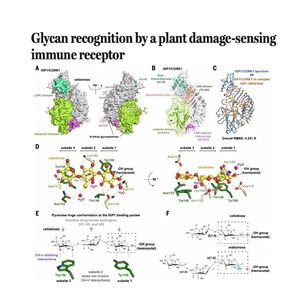
Plants rely on their cell walls as a primary structural barrier and an active sensor for monitoring potential danger. When pathogens invade, their enzymes break down cellulose, releasing small sugar fragments known as cello-oligomers that act as warning signals. These fragments are precisely recognized by the cell surface receptor IGP1, which features a specialized binding pocket that strictly requires specific chain lengths and stereochemical configurations. Upon detecting these damage-associated molecular patterns, IGP1 does not trigger a full immune response directly; instead, it enhances the plant's immune readiness by boosting receptor expression and priming defenses for faster action. To prevent inappropriate activation during normal growth or infection, plants utilize cellodextrin oxidases to chemically modify and neutralize these sugar fragments into inactive forms, thereby balancing immune amplification with metabolic control.
References:
Jiménez-Sandoval P, Kentish O, Broyart C, et al. Glycan recognition by a plant damage-sensing immune receptor[J]. Science, 2026: eaec6740.
