

 0
 0
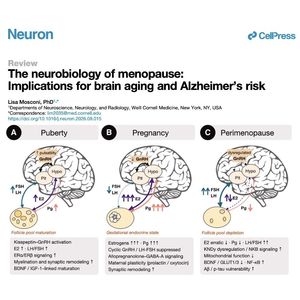
The reviewed literature establishes the menopausal transition as a critical neuroendocrine turning point that significantly shapes female brain aging and Alzheimer's disease vulnerability. Ovarian hormones act as essential neuroprotective agents governing mitochondrial bioenergetics, synaptic plasticity, and neuroinflammatory regulation throughout a woman's lifespan. During perimenopause and postmenopause, the permanent withdrawal of these hormones disrupts brain receptor signaling and accelerates cellular aging processes. Consequently, midlife women—particularly those experiencing early or surgical menopause—exhibit heightened biomarker risks for neurodegeneration compared to men of similar ages. While menopause hormone therapy yields conflicting cognitive outcomes depending on the age of initiation, timely interventions near the onset of menopause may offer strategic pathways for risk stratification and prevention.
References:
Mosconi L. The neurobiology of menopause: Implications for brain aging and Alzheimer’s risk[J]. Neuron, 2026.
