- 还好吗
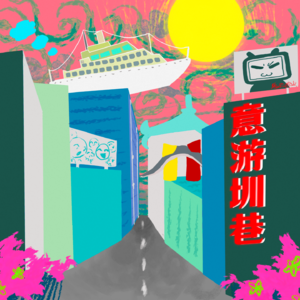
Song Writing & Composing/作词作曲:Iris & Apple Music Production/音乐制作:Iris Vocal/演唱:Iris Artist Statement We were inspired by the culture of Shekou. It is amazing to see people of different statuses, and economic levels there. We realized that in Shekou Sea World except having a lot of foreigners and people who come to play, there are also a lot of tired people who are really hard at work. Everyone is just very busy and realistic. After watching those tired people resting by the streets, we both had the idea of making an encouraging song. We hope it can give a lot of people energy, and can also make them feel happy at any time. If we look closely at Shekou, we can see many similarities between the Shekou community and us. Shekou is just a young and ambitious teenager, always moving forward through the changes in time and what’s prevalent, but still have different memories from childhood been kept. About the science part, you can hear that there was a very interesting sound appearing in the song, which was been played by us through the music player or can say a “small piano” we made, it includes all the keys from the central Cto the high C, in Ms. Xuefei’s class, we learned a lot about the soundwave. For example about the frequency, it is very interesting to know that every note has its own frequency, and that is what makes them have a different pitch. For example, the frequency for G is 392. These helped us a lot when editing the code for the music player. After learning about music and noise, we also learned about the circuit which helped us a lot in our process of making the “small piano”, a circuit needs a power supply, a resistor, and a switch, and we used a parallel circuit for this project, we also learned the ways to calculate the voltage, current and resistor. There are really a lot of calculations in this unit, it is very hard, but we still really enjoy the process. Last but not least, in our English class we read a book called Nocturnes, it is a book that connects with music but mainly about different character’s personal life, the music is been used as a leader to talk about life, to talk about emotion, and to talk about love. All five stories are written in first person, and they are all full of romance that needs to be savored carefully. All of them are just one small moment that happened in their life, and all of them are wrapped with different kinds of relationships and feelings such as friendship, love, and family affection. We will meet a lot of people in our lives and fate is the main reason for every meeting, the story was short, and the feeling is very unbelievable like everything was just a dream, but that is also what that enriches our experiences, and this might be a reason of why this book is called Nocturnes. 还好吗 梦随海风而去 城市的灯光带走了一切幻想的机会 我还得足够坚强才能面对 我没法时刻都去遵守那生活的规则 有时候只有那没完没了的绝对抉择 生活变得乏味是否也因为这个 你还好吗 你过得怎样 时间带走了一切的一切 而我们还在不停的长大 老奶奶在旁边卖着那熟悉的风筝 而我已没有时间玩啦 只好再盼望那些可能 努力的向上继续攀爬 生活就是这样 无时无刻不得停歇 每次还都得让领导为我敬佩 我很想说 (我知道没有人能够是完美的 我却总想 (如果一切能重开那结局是否还一样 我不反对 (世间一切总有美好会存在着 但事实与理想的差距 永远不会那么简单 我很想说 (我知道没有人能够是完美的 我却总想 (如果一切能重开那结局是否还一样 我不反对 (世间一切总有美好会存在着 但事实与理想的差距 永远不会那么简单 他们总说“时间就是金钱,效率就是生命” 可我还是没法做到那么争气 为什么虚实不能更替 让世界升个级 这是全世界都在诉求的争议 我想成为我世界里的那刻星星 我想聚齐所有勇气来给我信心 不想再次继续使用我幕后匿名 我还想不停奔跑去追逐那刻黎明 路边彩虹色的鲜花轮胎 被头顶的鸭子死死的盯着 明明就是 那么的特别 那么的出众 却还是总被上面压着没法制造那场轰动 折叠的楼梯上带着些许放弃 丰富的街道又承载着多少努力 崩溃的场景逐渐成了常客 喜欢的事情也成了那杯没气的可乐 为啥梦就不能做大点呢 我开着炫酷的车 给领导一泼水喝 继续做伟大的梦想家 给生活加点愉快吧 我很想说 (我知道没有人能够是完美的 我却总想 (如果一切能重开那结局是否还一样 我不反对 (世间一切总有美好会存在着 但事实与理想的差距 永远不会简单 我很想说 (我知道没有人能够是完美的 我却总想 (如果一切能重开那结局是否还一样 我不反对 (世间一切总有美好会存在着 但事实与理想的差距 永远不会那么简单 我很想说 (我知道没有人能够是完美的 我却总想 (如果一切能重开那结局是否还一样 我不反对 (世间一切总有美好会存在着 等春天到了 就一起绽放吧
4分钟 · 148
148 6
6 - 安静的城墙
Song Writing & Composing/作词作曲:Sam & Angela Music Production/音乐制作:Sam Vocal/演唱:Sam Artist Statement In this project, my group creates a song. Our song tells the story of a young person who temporarily lived in the Nantou ancient city in Shenzhen. We describe his day in the city. The narrative plot is used to let audience see the daily life of people in low classes. For points that have subjectivity feelings, are mainly used for expressing the difference between new and old and my thoughts as an author. We use personal perspectives and make it seems more common and realistic. To create this song, we get many information accumulations from both field trips and songs written by famous singers. In our field trips, we saw old residents building standing behind the new shops; we saw traditional jewelry shop opposite the baby grabbing machine shop; we saw a French café beside an old breakfast shop… we found the beauty of contrasts and we use it in our music, representing on both melody and lyrics. The beauty we found set the tone of our music, and the song from celebrities like “WuTiaoren” and “Tangchao” give us inspiration for the image we use. The “camel” “shade” used in WuTiaoren’s song refers to the friend, the emotions, and love, these are all images that have deeper meanings and need to be analyzed by listeners, we learn that and tried to add our own images. To describe the character, we use a youth hotel to represent the poor and disappointed, café to hint at the dream to have a relaxing life and being successful, traditional breakfast shop means the forced surrender of the dream to life. The theme of this song is to reveal the unseen class in highly developed cities like Shenzhen. This class is hidden from the prosperous development. Also, they present the “old” part of the city as their lifestyle is very different from the “new” part. Highlighting this contrast, is for people not to forget about the past. From the National Goods Movement from 1927, people’s attitude to new things is apparently led by the government, things that the government claimed is forced to accept. People have always been bystanders in Chinese culture. We work as a family under the same name for most of the time. As a result, people are not passionate about things happening in this world that do not have a direct effect on them. This song is acting as a bridge to connect people to their outside world. In this music, we use the garage band as a helping tool and Arduino and coding as melody. The effect of the technique in this song is unforgettable. We learned how music is produced by waves and the relationship between pitch and frequency and used circuits to build a medium to make sound and keyboard. From the making of this song, we learn not just combining, but including the skills of writing, expressing emotions, and the science of sounds. We are waiting for more and more fun projects for us to improve like this. 安静的城墙 傍晚走在城墙边 走在微风拂拂的五月天 是我依依不舍 靠在着最后一堵墙 努力的拼起过往的回忆 想起在县衙小院里打闹 想起张伯伯凶狠的藏獒 可我还是记不起我和你的面貌 我们在这成长 我们看它消亡 可我无法接受 这些虚假的改变 我看见一个孤独的影子 月光下照应的影子 他们都不见了 又有谁能听到我的声音呢 城墙消失了 一同消失的还有我们的回忆
4分钟 ·1163 - A TIME OF TIMES
Song Writing/作词:Winnie Zhang Song Composition/作曲:Nicholas Zhuo Music Production/音乐制作:Alex Fan Producer/制作人:Nicholas Zhuo Vocals/演唱:Winnie Zhang Artist Statement When we looked at the differences between the main streets and the residential areas in Nantou Ancient City, we observed that they are very different. Different smells and living styles all build a contrast between the two places. That is a very severe issue, especially for the locals living there. "This is a fxxking dehumanized world," as JiGong, a performer emulating a monk who lives in Nantou Ancient City puts it, "The site developers took everything away from the authentic business." In our conversation, the monk told us that many residentials had their water and electric sources cut off due to the newcomers of Wanke. The impact was so strong that everyone in the local area started talking about it; we decided to tell his story and the community. The city holds a cultural cross between the old and the new. We'd see hybrid structures with unique modern roofs awning over the traditional, rusted, post, and panel brick buildings. So we decided to add that to our music, crunching together various harmonics from instruments that are both "old" and"young." Using the traditional Chinese instrument Pipa as the melody, we mixed it with the modern drum set Flex 808. Although it wasn't in our final exhibition music, that still was a part of our process: attempting to collage what there is in the culture of Nantou Ancient City into the music we make. “You have to prepare to make changes, some of them hard, change the way you are; you even change some things you love.” - This is from the story Crooner in Nocturnes, one towards the struggle; the desire for money and fame plays a role here; JiGong is a performer who another sense, relates directly to the main character, Tony Gardner, of this story: One wanted a comeback, out of fame and his career, which he sacrificed his loved one for it; the other one wanted possibilities for money, and ran from Heilongjiang City south to Nantou Ancient City and stayed there for almost thirty years. A Time of Times 古街街角与你相遇 每当把你想起 城市的车水马龙 互相追赶焦急 石板路映出了青色 窗外又泛起了小雨 再没人能让我的心热 还再等你的消息 都在向我靠近 都向我靠近 随手掷出的一粒 就发现你的猫腻 一个城市的上空 到夜晚变成橙红色 我独自的防空 深夜凌晨蛮朦胧的 想不开 到现在想不开 没了你的舞台 我怎么讲出来 渺小 平庸 幻想 孤独 可怜的人儿 痛苦的呻吟, ay, 我的心上人 见不到你我就经常疼。 伤感 无奈 可怜 潇洒 为了得到你的爱, 我在疯狂抵赖。 破碎 疏离 感受 空虚 参透事件真理后 看到人们都放开手 ay, 我的心上人 见不到你我就经常疼。 说不出口 我独自花园往向你 喝不够酒 看到那个人真像你 他们都有 但我却没有能力奔向你 能不能懂 你能不能懂 放弃了一切都放弃后 我不选择跟你走 参透事件真理后 看到人们都举起手 渺小 平庸 幻想 孤独 可怜的人儿 痛苦的呻吟, ay, 我的心上人 见不到你我就经常疼。 伤感 无奈 可怜 潇洒 为了得到你的爱, 我在疯狂抵赖。 破碎 疏离 感受 空虚 参透事件真理后 看到人们都放开手 ay, 我的心上人 见不到你我的心就经常疼。 渺小 平庸 幻想 孤独 可怜的人儿 痛苦的呻吟, ay, 我的心上人 见不到你我的心就经常疼。 伤感 无奈 可怜 潇洒 为了得到你的爱, 我在疯狂抵赖。 破碎 疏离 感受 空虚 参透事件真理后 看到人们都放开手 ay, 我的心上人 见不到你我的心就经常疼。
3分钟 ·862 - 迷惘夜港
Song Writing & Composing/作词作曲:Cici & Rianna Music Production/音乐制作:Cici & Rianna Vocal/演唱:Cici Artist Statement Metamorphosis, a phase every teenager encounters in adolescence, is the inspiration that came from our visit to the Yantian harbor of Shenzhen. Everything there including the tower cranes, long cars, and trucks, all working mechanically, in a regular and orderly manner. From a distance, the containers there look like monotonous mosaics copied and pasted, arranged in rows by machines with no emotions at people's disposal, waiting to be loaded, unloaded, and for their upcoming destiny of being transported to various unknown places. They remind us of our adolescence of being lost and confused. During adolescence, we gradually transform from children who only listen and accept the arrangement of the outside world to young adults with unique ideas and richer worlds. Inevitably, we experience confusion and self-doubt. However, in the end, the port is facing outwards, and along with the unknown comes numerous windows for opportunities. We imagine ourselves as the containers waiting to be loaded, unaware of the challenges and excitements we’ll face. And as each ship slowly vanishes under faint moonlight, we’ll bid farewell to our former selves and embrace the (re)union between us and more possibilities. Watching the last freighter disappear between the horizon, we think of the short story collection Nocturnes by Kazuo Ishiguro. In the collection, music is the stage that allows unique souls to meet. They stimulate each other, and together, with courage, they face the uncertainties and challenges of the future. Music plays the same role in our lives. Our group wants to emphasize the importance of science and technology to the development of music. We used Arduino Uno to code frequencies and harmonics, generate our song's intro, and Garageband to create the rest. Through woozy eyes, the sound wave diagram on the whiteboard gradually assumes the shape and motion of ocean waves; the particles pushed back and forth become grains of wet sand. We can hear the splashes created by small tides hitting metal poles, the cries of seagulls circling the planet, and the horns of ships taking off. Our music is just like the melody that you unconsciously hum when watching the sea. Unlike the monotonous containers being arranged at Yantian port, we ambitious teenagers have the courage to take control of the initiative in our own hands and become the determinator of our own lives. 迷惘夜港 黑色被织成巨大的网 笼罩灯火阑珊的港湾 寂静夜晚的火苗与沙粒 沉落海底,被渔船捞起 灯塔照耀来往的船只 唯独照亮不了自己 它是否会曾想起 无数个夜晚的孤寂? 没有星星的夜晚 没有方向的海风 没有生命的脉搏 没有主见的人生 船只消逝在浑浊的海 对流星许愿从未成真 我却依然,举起双手 试图抓住,那明亮的星 灯塔照耀着来往的船只 唯独照亮不了自己 它是否会曾想起 无数个夜晚的孤寂? 不能回溯的记忆 不能倒叙的经历 不能反悔的决定 不能一探的究竟
5分钟 ·802 - 在遥远的阿拉伯山崖
Song Writing & Composing/作词作曲:Yuti & Dora Music Production/音乐制作:Yuti Vocal/演唱:Yuti Mental Support/精神支柱:Dora Artist Statement One with an old camera, one with an umbrella, two people walked across Minghua in Shekou, small lanes in Nantou, streams of people in Huaqiang North, then stopped at Yantian Harbor. Weare two ninth graders, Yuti and Dora. This song, dedicated to UABB’s biennale, expresses the new generation’s view on the development of Shenzhen. Our work tells the story of a placid love affair that resulted in two people going their separate ways. While integrating scientific knowledge and representation of this particular space into the lyrics, we also merge into our wanderlust and explore the contrast between nature and industry in the harbor area. Through this song, we wish to speak with music and introduce the harbor that glistens under our lens. “What are people like?” was a question I wrote in my notebook when our group was just setting off. Yantian harbor gave a perfect answer, not with words, but with distant views of the shipments and Wutong mountain. Places near the sea were tintless, yet, the blue sage that was entangled with bees showed an obtrusive color. There we knew, it's nature, the mountain, and the sea, that keeps this place alive. However, the vibrancy only stays when all manufacturers, business relations, and undistinguished boxes are there to set off by contrast. Turning the scenes into characters, we wrote a ballad about a love journey with the wind and the crane serving as symbols for “you” and “me”. The crane yearns for the freedom of the wind; the wind hopes to be as steadfast as the crane. Both are instinctively attracted to each other, but their disparity makes this love unreachable. People are like the crane, the wind, or things in between, and are naturally attracted to ones with values they can’t obtain. In “symposium,” Plato addresses the concept of two people coming from one, and the hope and pursuit we have for being "complete" is what we want out of love. We linked this idea to resonance, a phenomenon that only occurs when an object is vibrating at the natural frequency of another object. The key here is “match” and by matching, resonance will occur between more than just objects but also people. In real life, “it was a near miracle to find anyone else who shared such passions”. It’s just like what Kazuo Ishiguro wrote in Come Rain or Come Shine. The lover in our piece shared different frequencies, although the complementarity of the two is harmonious, there will never be a resonance. With this observation and this song, our group wants to convey the thought that the essence behind any sort of steady relation is to reach equilibrium. Whether it’s cultural or social development, the city will be in its best state when a good balance is maintained. 在遥远的阿拉伯山崖 彩色的地方 无暇的意象 五彩风筝卡在了树上 你说它很漂亮 灰色的海港 蓝色的手掌 无聊玩笑变成烦恼 我厌倦了争吵 远处发现了沉船 吊车与风儿相爱 你在无法靠近的口岸 我已放弃迷惘的徘徊 白色的解药 回忆的吵闹 绿浪不顾一切地奔跑 你好像什么都不想要 无色的遗忘 散去的拥抱 蜜蜂它不再费力讨好 我怪花儿太烦躁 远处发现了沉船 吊车与风儿相爱 你在无法靠近的口岸 我已放弃迷惘的徘徊
3分钟 ·1376 - 别问我是谁,我就是一个档口老板
Song Writing & Composing/作词作曲:Alex、Austin Music Production/音乐制作:Alex Vocal/演唱:Austin Artist Statement Daily, we meet many people. In Huaqiangbei, we met the store owners and saw the stalls. Mainly our group's ideas come from real life, for the ordinary. Writing about the stars is effortless; they have highlights and points in their lives you can use to create a song, but for the common, you have to find the spots of their lives and dive deep into what is there. We always think that we know our lives to the back of our heads, but when you finally make a song, ordinary lives are always the hardest. The people that keep this world alive are the people we don't usually notice, people behind the scenes doing there's living as a part of this big community. We chose Huaqiangbei because of its tech and its blending with the city's culture and history. The people in Huaqiangbei right now are the ones that see this city grow, how it came from a rip-off fake product store and slowly become one of the most diverse, tech-supportive places in the whole world. This is also what our song is named; “Don't mind me; I'm just a stall owner.” ‘ It was also challenging to record videos and photos that reflected our original theme, probably because of the time of the visit. It was also right after the lifting of the zero-covid policy, and things had not fully recovered. Just like us, they get frustrated by the impact COVID has brought them, letting them out of the store for loads of time; we get anxious about the due dates and if we can get a good grade. When I talk to them, they tell me, from the point of an insider, how this city has changed in the past decades, how they originated and grew their stall, how they get angry with stupid customers, sad from all the supply chain issues. Like us, they worry about their family, their next lunch, survival questions, and more. Once you leave school and reach society, it's not that different but also very different. Instead of using steel and drums to make music, or strings and boxes, nowadays, we can use a digital keyboard, no more vibrations and those things, you play a note on your computer, and the amplifier and loudspeakers can make the sound for you. So, it is far easier for me to create my song for someone who doesn't know that many music-playing skills and has a music theory background. Furthermore, I can pre-record things, so I don't have to play live. 别问我是谁,我就是一个档口老板 想起开着那辆全新的桑塔纳来到了华强北 亮黑的油漆在太阳下闪烁 在一间漏水的旅馆 组装了人生第一台大块头 小时候,没有电灯 看报纸上大城市华丽 低头望着青草花芬 从未想过,自己就身处城市 今后的日子不知道如何活着 现在的泥巴路成为了水泥路 我们的青草变成芯片螺丝 我们的马儿 我们的鱼儿 我们的鸟儿 变成了 车子 船只 大飞机 时代交界口 我们不一样 在这个十字路口,有人 往右坐下 往前进步 往左倒退 莫问君是哪个人儿 因我就是个 档口老板 当上了小时候最想当的职业 看着高楼拔地而起 身边都变了 就我没变 还在赛格买着螺丝 我要是跟你吹我遇到过谁 那 大疆的领导 华为的采购 比亚迪的创始人小子 富士康的质检员 在这个十字路口,有人 往右坐下 往前进步 往左倒退 莫问君是哪个人儿 因我就是个 档口老板 我是最早的深圳人 但也是最晚的深圳人 拆迁,挪位 都跟我无关 我们必须学会知道儿 跟妈妈说烦恼 他也会伤心 跟爸爸说生活 他也会后悔 如今那辆桑塔纳还停在角落里 你还是你 可油漆早以丢掉往年的光泽 绣掉的轮毂藏着千万个快乐与悲伤的经历 不管遇到什么 当年的 那辆桑塔纳还在那里等你 你还记得吗 莫问君是哪个人儿 因我就是个 档口老板
3分钟 ·1143 - 归心对月明
Song Writing &Composing/作词作曲:Alvin & Lilliana Music Production/音乐制作:Alvin Vocal/演唱:Alvin & Lilliana Artist Statement In only forty years, Shenzhen turned from a small Chinese fishing village into a modernized, internationalized city. However, there is still a clash and symbioses between the old Chinese traditions and western modernization, which is why our song's verses are written in Chinese poetry style, the chorus in modern Chinese style, and the music is punk rock. We modified an electric guitar specifically for the use of producing punk rock: we changed the pickups and the circuit to make the music powerful and lively, which sets the whole tone for our song to embody the clash and symbioses of old and new, traditions and trends, of what Shenzhen is at this very moment. And also, there’s nothing more interesting than listening to a song with mixed genres. Our song sings about a man arriving at Shekou harbor on a cruise, thinking that he has found a home. However, when he starts to live in Shenzhen, he realizes that even though he gradually gets to know Shenzhen very well, Shenzhen is still not his home. So he roams Shekou alone at night, thinking, "Black is not night It's long loneliness" We created our song based in Shekou because we thought it was the most internationalized place in Shenzhen, and we embedded our feelings towards Shekou, towards the whole of Shenzhen, and the whole of society, into our song. The person we depicted in the song represents everyone who comes to Shenzhen. On our visit to Shekou, it was midday on Monday. Although there weren't many people around, we still saw five or six foreigners, including two men from Afghanistan. After all, Shenzhen is a migrant city; most people living here are from other parts of China and the world. This is why there is a saying, "If you come to Shenzhen, you are Shenzhen." But being a Shenzhener doesn't guarantee you find a place or a sense of belonging in Shenzhen. Also, with Nanshan district having the highest GDP among all districts in China, it's not a surprise that the pressure for survival is always very high. After all, being a Shenzhener doesn't mean Shenzhen is where home is. However, songs and music can sometimes be a home to return to while we are living like duckweeds in a fast-paced society, just like April in Paris, the song Raymond and Emily danced to in Kazuo Ishiguro's short story Come Rain or Come Shine, it will always be a place where "we are safe". We hope our song will resonate with you, and become a home you can escape to. 归心对月明 潮纹平 火独明 万里弄长笛 月风轻 秋毫盈 飘摇过潮汐地 我来到城市 多么熟悉 不知不觉 会想家 黑色不是夜晚 是漫长的孤单 世界万物可怕 在这里游荡 萧鼓唤游人 风正一帆近 归去与我 眉间蕴十分欢喜 看云聚云黑 都逃不过穹宇 数不完的 阴晴换圆缺 我来到城市 多么熟悉 不知不觉 会想家 黑色不是夜晚 是漫长的孤单 世界万物可怕 在这里游荡 孤船闻瑶琴 翩翩和一曲 海月生浪静 江秋天低树 独立望空情 波光映人兴 我万里归心 对月明
3分钟 ·792