

 907
907 1
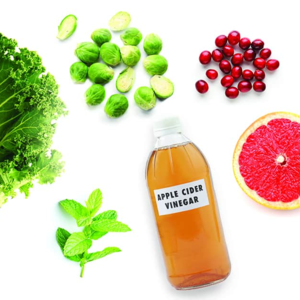
1Hello. This is 6 Minute English from BBC Learning English. I'm Phil. And I'm Beth. Phil, I'm going to start this episode with grapefruit - I've got some here - do you want some? Er, I'm not that keen on grapefruit - they're too bitter for me. Oh, that's a shame, because this episode is all about bitter food. It has actually been linked to a number of health benefits. So maybe you should take my grapefruit.
这一期我要从葡萄柚开始——我这里有一些——你想要一些吗?呃,我不太喜欢葡萄柚——它们对我来说太苦了。哦,那真是太可惜了,因为这一期都是关于苦味食物的。它实际上与许多健康益处有关。所以也许你应该吃我的葡萄柚。
I might not like it that much, but in this programme, we'll be finding out how bitter foods can benefit our health. And, of course, we'll be learning some useful new vocabulary. That should give you a taste of what's coming up, but before that, if you want to learn vocabulary to talk about world events - search for our News Review podcast - we look at vocabulary about a major news story every week. But, back to this episode - I have a question for you, Phil. How many different basic flavours can humans taste? Is it: a) 4? b) 5? or, c) 6? Hmmm, I can think of bitter, sweet, salty and sour - so I'm going to go with four. I think we can taste 4 basic flavours. OK, Phil, I'll reveal the correct answer later.
Leyla Kazim presents 'The Food Programme' on BBC Radio 4. Here she is talking about some of the possible benefits of bitter food. New research has found a remarkable link between bitter foods and our health. It seems they have an incredible ability to interact with our gut microbiome, suppress feelings of hunger, control glucose release and even counter chronic inflammation in the body. Could bitter be the answer at the tip of our tastebuds?
Bitter foods can interact with our gut microbiome. A microbiome is a collection of microorganisms that can be found in a particular part of the body. It includes fungi, bacteria and viruses. Microorganisms in our gut play an important role in the digestive process - they are our gut microbiome. If we suppress something then we stop it from happening or operating. We heard that bitter foods can suppress hunger feelings. This means that they stop people feeling hungry. If we try to suppress a feeling, we are trying to stop it. Leyla asks if bitter foods are the answer at the tip of our tastebuds. Normally we'd say that something that we can't quite remember is on tip of our tongue. Here we have tastebuds, which are the receptors on our tongue and inside our mouths that can detect flavours, like bitterness.
So, it seems that bitter foods could be very beneficial, but they are not always the easiest foods to love. In BBC Radio 4's 'The Food Programme', presenter Leyla Kazim spoke to chef Alexina Anatole, who points out that we might be consuming more bitter food than we realise: I think it's a real perception issue with it. I think people are exposed to bitters way more than they think they are, but there's this perception of bitter and negativity, both in terms of emotions and food, right? Bitterness is generally an undesirable trait, but there are so many very very mainstream bitter things. Such as? Chocolate, coffee, alcohol, any alcohol has a degree of bitterness to it.
Alexina says that many people see bitterness as an undesirable trait. A trait is a characteristic, so an undesirable trait is a characteristic that people don't want. We often see bitterness as a bad thing. We also often use undesirable traits to refer to negative aspects of people's personalities. Alexina points out that there are a number of mainstream things that have a bitter flavour. If something is mainstream, then it means it's ordinary and part of what most people consume - she listed chocolate and coffee as mainstream things. The other mainstream thing mentioned was alcohol - we heard that it has a degree of bitterness. If something has a degree of something, then it has at least a small, but noticeable amount of it.
OK, now I think it's time to hear to the answer to your question. Right, I asked how many basic flavours humans can taste. And I guessed it was four. Which, unfortunately was not the right answer. The answer is in fact five. The flavour that you missed is umami, which comes from a Japanese word and refers to a savoury flavour often found in grilled meats or broths. OK, let's recap the vocabulary we've learned, starting with, microbiome, the collection of microorganisms found in a specific part of the body. Suppress means prevent from operating or happening. Tastebuds are the receptors found on in the tongue and in the mouth that sense flavours. An undesirable trait is a negative characteristic that we don't want. If something is mainstream, then it is something that most people would use. It's not unusual. And finally, a degree of something is a small, but noticeable amount of something.
Once again, our six minutes are up! Remember to join us again next time for more topical discussion and useful vocabulary, here at 6 Minute English.
✔更多内容见公众号【琐简英语】,回复“1”,可进入【打卡交流群】