
 873
873 2
2How bubble tea got its bubbles
I'm Neil. And I'm Beth. Are you a tea or coffee drinker, Neil? Well, I usually drink a cup of coffee in the morning. How about you, Beth? Oh, I'm definitely a tea drinker. There's nothing like a good cuppa to start the day. Yes, a cuppa – it's a word in British English meaning a cup of tea, right?
But there are many different types of tea. Which tea do you like? Well, I usually drink English Breakfast tea in the morning, then a matcha tea at lunch, and maybe a calming herbal tea before bed. Wow! It sounds like you're a real tea addict, Beth, so you'll love this programme because we're discussing an exciting drink called 'bubble tea'. And, as usual, we'll be learning some useful new vocabulary as well.
但茶的种类有很多。你喜欢哪种茶?嗯,我通常早上喝英式早餐茶,中午喝抹茶,睡前可能会喝一种安神的花草茶。哇哦,贝丝,听起来你是个真正的茶迷,所以你一定会喜欢这个节目,因为我们将讨论一种叫做 “珍珠奶茶”的令人兴奋的饮料。和往常一样,我们还将学习一些有用的新词汇。
Great. But first, I have a question for you, Neil. Today, British supermarkets sell almost twice as much coffee as tea, and consumer surveys have found that a majority of Brits prefer drinking coffee. So, what proportion of Brits do you think still regularly drink tea? Is it: a) 39% b) 49% or, c) 59%? Well, let me think about that. I'm going to say b) 49%. OK, Neil, I'll reveal the answer at the end of the programme.
好极了但首先,我有个问题要问你,尼尔。如今,英国超市出售的咖啡几乎是茶的两倍,消费者调查发现,大多数英国人更喜欢喝咖啡。那么,您认为有多大比例的英国人仍然经常喝茶呢?是:a) 39% b) 49% 还是 c) 59%?好吧,让我想想。我认为是 b) 49%。好的,尼尔,我会在节目最后揭晓答案。
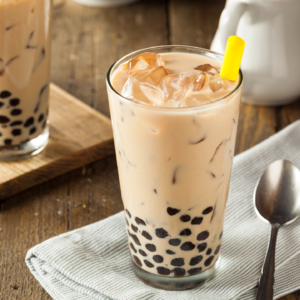
People have been drinking tea for centuries, but that doesn't mean tea drinking hasn't changed over the years. Here in Britain, new trends such as iced tea and green matcha tea have become as popular as the traditional English cuppa which, as everyone knows, is black tea with a splash of milk. One of the latest tea trends is pearl milk tea, also called bubble tea, but if you've never heard of it, don't worry - here's presenter, Ben Henderson, explaining more for BBC World Service programme, Witness History: For those who don't know, pearl milk tea or bubble tea, is tea usually mixed with milk, crushed ice and filled with its signature chewy tapioca balls. But customers can then add whatever flavours they want. It's innovative and exciting.
人们喝茶已经有几个世纪了,但这并不意味着这些年来喝茶没有改变。在英国,冰茶和青抹茶等新潮流已经像传统的英国茶一样流行,众所周知,英国茶是一种加牛奶的红茶。最新的茶趋势之一是珍珠奶茶,也被称为泡泡茶,但如果你从未听说过,不要担心——这里的主持人本·亨德森为BBC世界服务节目《见证历史》解释了更多内容:对于那些不知道的人来说,珍珠奶茶或泡泡茶是一种通常与牛奶、碎冰混合并填充其标志性的耐嚼木薯球的茶。但顾客可以添加他们想要的任何口味。它是创新和令人兴奋的。
The 'bubbles' in a glass of bubble tea are made from balls of a chewy starch called tapioca. Food which is chewy needs to be chewed a lot before it becomes soft enough to swallow. It's these tapioca balls which give bubble tea its name. You might say they're bubble tea's signature ingredient – they're a special feature for which something is particularly known. For example, paella is the signature dish of Spain. What's more, because tapioca doesn't have a strong taste, different flavours can be added, making bubble tea an innovative, meaning new and original, drink.
But it was only when famous international celebrities including basketball player, Michael Jordan, and movie star, Jackie Chan, started visiting his tea shop, that Liu Han-Chieh's bubble tea began a revolution in the tea-drinking world. Here is Liu Han-Chieh telling more to BBC World Service programme, Witness History: Pearl milk tea got huge media coverage and it spread like wildfire. But I always say, we have many other products, and the reason pearl milk tea became so popular was pure luck. It was a miracle.
Thanks to its celebrity fans, Liu Han-Chieh's bubble tea became an international bestseller, and news of his exciting new drink spread like wildfire, an idiom meaning it became quickly known by many people. For Liu Han-Chieh it was a miracle, a very lucky event that is surprising and unexpected. It's great to hear about something that gives a modern twist to a drink that's part of a country's traditional culture… Maybe that's what we need here in Britain too.
Yes, your question was about the fact that nowadays more people in Britain prefer coffee than tea. I think it's time you revealed the answer. Right. I asked you what percent of Brits still regularly prefer drinking tea over coffee and you said 49 percent, which was… the wrong answer I'm afraid, Neil. In fact, around 59 percent of Brits still regularly drink tea. Maybe it's time for a bubble tea revolution over here!
OK, let's recap the vocabulary we've learned in this programme, starting with cuppa, an informal word in British English for a cup of tea. The word signature describes a special feature for which something is particularly known. If food is chewy it needs to be chewed a lot before it's soft enough to swallow. The adjective innovative means new and original. If something spreads like wildfire, it becomes quickly known by more and more people. And finally, a miracle is a very lucky event that is surprising and unexpected.
✔更多内容见公众号【琐简英语】,回复“1”,可进入【打卡交流群】