
ISABEL ROSALES, CNN 10 ANCHOR: Hello everyone, I'm Isabel Rosales filling in today for Coy, who has the day off. It is so good to be with you.
It is Monday, September the 23rd, and I've got 10 minutes to get you caught up on your news for the day right here on CNN 10.
We begin in New York City where the U.N. General Assembly kicks off this week. It is an annual meeting of world leaders that has happened every year since the United Nations was founded back in 1945. The summit features speeches from presidents and prime ministers from all over the world and lots of meetings about important international topics.
But this year's UNGA takes place against a backdrop of global conflict. There's the ongoing war between Russia and Ukraine. Russia invaded Ukraine in 2022 and Ukrainian President Volodymyr Zelenskyy is due to give a speech on Wednesday.
Then there is a growing conflict in the Middle East. Israel has been at war with Hamas since a terrorist group attacked its citizens on October 7th.
More than 40,000 Palestinians have been killed in Gaza in this ongoing war.
And now the conflict appears to be spreading as tensions between Israel and another terrorist group in the region known as Hezbollah escalate.
Israeli Prime Minister Benjamin Netanyahu has already delayed his trip to New York for the United Nations General Assembly because of what's happening there. Hezbollah has one of the most powerful paramilitary forces in the Middle East and its main base sits on the Israel-Lebanon border.
There have been some skirmishes between Israel and Hezbollah since October the 7th. But in the last week, they have traded their most intense fire. It ramped up after a suspected secret operation by Israel to blow up wireless devices belonging to members of Hezbollah. The Israeli government has not acknowledged that.
But Hezbollah retaliated, firing scores of rockets and missiles over the weekend into Israel. Most of those were intercepted, but some fell, causing damage.
Israel also carried out hundreds of strikes inside Lebanon. And what the military said was preemptive action against a planned Hezbollah attack.
Because of this intensifying situation, the U.S. State Department is warning Americans not to travel to Lebanon and says they should leave if they're already there.
Next up, we head to South America, where the continent is setting records for the number of wildfires seen in a year. From Brazil's Amazon rainforest to Peru's croplands, officials there are doing what they can to fight the flames as climate conditions become more severe. CNN's Gustavo Valdes reports.
GUSTAVO VALDES, CNN CORRESPONDENT (voice-over): The Amazon region is on fire. Flames engulf large swathes of land, mainly in Brazil and Peru, overwhelming responders and polluting the air in many countries struggling to contain the blaze.
This week, the Peruvian president declared three regions under state of emergency, as firefighters do their best to contain the fires.
I beg you to stop burning grassland, says Gustavo Adrianzen, president of the Council of Ministers who said every single one of the more than 200 fires reported in all but two of the country's 26 regions were allegedly started by humans, trying to clear land for agricultural purposes. He says Peru has limited resources and has not ruled out requesting help from the International Community. So, far, at least 16 people have died because of the fires, according to the government.
A severe drought in the Amazon is making things worse. This is a regional crisis, says Adrianzen, explaining that the drought extends throughout the whole Amazon region. Also affecting Ecuador, Brazil, and Paraguay. Brazil, South America's largest country, is struggling to contain the fires.
President Luiz Inacio Lula da Silva says they will spend some $90 million dollars in their efforts to control the flames.
The drought in Amazonia is so severe that sections of the mighty Amazon River are so shallow that ships can't navigate it. Even those not in the path of the fires are at risk.
Dr. Aldo Villavicencio says the air quality over much of Bolivia is too dangerous. The government there has encouraged schools to go back to virtual learning to avoid exposure to toxic air.
Almost 60 active fires were reported in Bolivia in one week. More than 3,000 firefighters are deployed on the ground, while planes dump water from the air to assist in their efforts.
September is typically the rainy season in the region. But this year, experts doubt it will be enough to stop the fires.
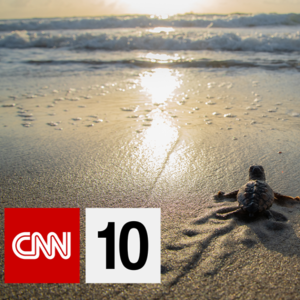
ROSALES: It is time for 10-second trivia. The hatchlings of, what animal have only a one in 1,000 survival rate in the wild? Is it penguins, alligators, sea turtles or ostrich?
The right answer here is sea turtles. They face a number of dangers like prey and pollution, and all seven species are endangered.
🌟 字数限制,完整文本和视频版见公众号【琐简】,回复"1"可进【打卡交流群】

CNN 10|General Assembly, raging wildfire, turtle protection
10分钟 · 99·
99· 0
0
990