
Why soil is one of the most amazing things on Earth | BBC Ideas
Soil. it's one the most underrated and little-understood wonders on our fragile planet. Here's why.
土壤。它是我们脆弱地球上最被低估和鲜为人知的奇迹之一。原因如下。
Far from being lifeless dirt, it's estimated that in a single gram of soil, there could be as many as 50,000 species of microscopic organisms, or microorganisms. And in one teaspoon of soil, there are more microorganisms than there are people on the Earth. But much of what lies beneath, in this hidden and deep universe, is still alien to us. Despite being literally under our feet, humans have so far only identified a tiny fraction of the extraordinary life teeming underground. But these animals and microorganisms provide an invaluable role.
它绝不是无生命的泥土,据估计,在一克土壤中可能存在多达50,000种微生物。而在一茶匙土壤中,微生物的数量比地球上的人口还要多。但我们脚下这个隐藏的、深邃的宇宙中,还有许多东西对我们来说是陌生的。尽管这些生命就在我们脚下,但迄今为止,人类只发现了地下蕴藏的非凡生命中的一小部分。但是,这些动物和微生物却发挥着不可估量的作用。
Millions of years of evolutionary competition have led the microorganisms to produce antibiotic compounds to fight their neighbours. And these compounds form the basis of many of the antibiotics used by us humans. We literally make medicine from our soil. No-one knows how many new treatments could be lying under our feet, waiting to be discovered.
经过数百万年的进化竞争,微生物产生了抗生素化合物来对抗它们的邻居。这些化合物构成了我们人类使用的许多抗生素的基础。我们实际上是在用我们的土壤制造药物。没有人知道,在我们的脚下还有多少新的治疗方法等待我们去发现。
One of the most special creatures living in soil is the earthworm. Darwin was fascinated by them and said: "It may be doubted if there are any other animals which have played such an important part in the history of the world," due to their importance in making and sustaining soil. Earthworms journey down and around, creating breathing holes, like lungs in the soil. This creates space for plant roots to grow and keeps soil alive.
蚯蚓是生活在土壤中最特别的生物之一。达尔文对它们非常着迷,他说:“人们可能会怀疑是否还有其他动物在世界历史上扮演过如此重要的角色”,因为它们在形成和维持土壤方面发挥着重要作用。蚯蚓向下和四周爬行,在土壤中形成像肺一样的呼吸孔。这为植物根系的生长创造了空间,保持了土壤的活力。
Under the soil, there are also vast and intricate webs of fungal threads. Plants and fungi need each other to thrive, and so they do a deal. Fungi can't capture carbon dioxide to grow like plants can, but they're better than plants at mining the soil for nutrients, so they trade. Plants give fungi carbon to grow, and fungi give plants nutrients, like nitrogen and phosphorus. It's a mutually beneficial relationship. And just one example of the interconnected ecosystem we're all part of.
Plant matter decays and provides food for microbes. They provide food for worms. Worms are food for birds and so on…Soil provides us humans with almost everything we eat. But it's not just about what soils can do for us. It's important we value, appreciate – and crucially, protect – soil for a whole load of other reasons, too. Think about this for a moment. It takes more than 100 years to build just 5 millimetres – half a centimetre – of soil. But just moments to destroy, through chemical contamination, urbanisation, landslides, erosion and more.
Some soil is really ancient – dating back millions and millions of years. The oldest soil on Earth is thought to be in South Africa and dates back three billion years. In the UK, our soil is around 15,000 years old, and it formed after the last ice age. Soil is also a really valuable carbon store – capturing carbon and locking it away in stable forms deep underground. It stores three times as much carbon as all the plants on Earth combined, including trees.
But because it grows so slowly, we need to protect what we have. We are not succeeding. We know many of the problems. Intensive farming is one of them. It releases carbon from our soils and we're losing soil 50 to 100 times faster than it's able to re-build. In Europe, 60-70% of soils are thought to be unhealthy. And in croplands in the UK, in less than 30 years from the end of the 1970s, we lost more than 10% of the carbon the soil had stored for us. And since then? Well, we just don't know, because in many countries there's little data on soil. It's poorly protected and regulated.
We grow on it, build on it, build from it. It filters and cleans our waters, reduces flooding, and regulates our atmosphere. It's one of the most biodiverse habitats on Earth and a vital part of the nitrogen and carbon cycle on our planet. But the sad truth is, right now, soil hasn't enough champions fighting for it. We literally treat it like dirt. And yet there is so much untapped potential, so much wonder, and so many secrets, just waiting to be discovered in the ground beneath our feet.
🌟字数限制, 完整翻译,视频版和pdf见公众号【琐简英语】,回复"1"可进【打卡交流群】
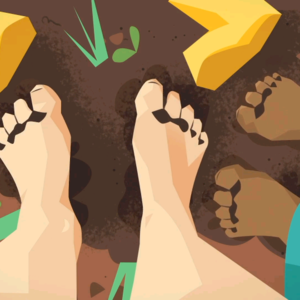

BBC Ideas|为什么土壤是地球上最神奇的物质之一?
4分钟 · 1074·
1074· 0
0
10740