
Coy wire: We start today with celebrations for the Lunar New Year, which are in full swing in China. Billions of people are traveling to celebrate with family and friends, making the celebration the largest annual human migration in the world. Officials are expecting a record 9 billion trips to China alone during the 40-day travel period.
While Lunar New Year is often commonly called Chinese New Year, it is also celebrated in Vietnamese, Korean, and other Asian traditions. Every year, families gather to celebrate and people from around the world travel for the festivities, filled with cultural customs like family feasts, dragon and lion dances, and giving red envelopes for good luck. The Lunar New Year began at the first new moon of the 12-month lunar calendar, kicking off the 15-day spring festival.
This year, it fell on January 29th, though a rush of travel began weeks before that. Most travelers within China are expected to travel by car, but the government expects train trips to top 510 million, with another 90 million traveling by air. Traditionally, the festival has been a time for families to gather, but it's also seen the rise of international travelers joining in the celebration. CNN's Ben Hunt brings us to the festivities as the masses gather to usher in the year of the snake.
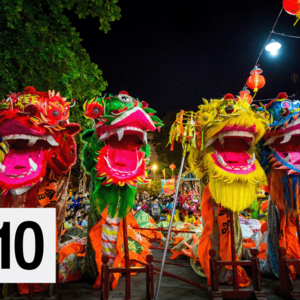
Ben Hunt: Dazzling dances usher in the Lunar New Year, drawing crowds from near and far to celebrate the Year of the Snake. It's a bustling time in China, and this year maybe even more so because of a surge of foreign tourists to the country.
Tourist: Well, this is the most important festival in China.
Ben Hunt: One popular Chinese travel service says bookings from international visitors during the holidays are up by more than 200% compared to the same time last year.
Tourist: Today I went to the Oriental Pearl Tower, I knew Yuan Garden, and had Peking roast duck.
Ben Hunt: China recently expanded its visa-free entry policy, which allows visitors from more than 50 countries to visit certain parts of the country without a visa for up to 10 days. And so far the move seems to be working.
Sun Yifeng(Bed and breakfast owner): Currently, foreign tourists account for more than 30% of our reception volume. A large number of tourists from Malaysia and Thailand came after the visa-free policy was implemented.
And on top of the surge in tourists, locals are also enjoying the holidays by visiting family and friends. The Lunar New Year travel rush is the world's largest annual human migration, and officials are expecting a record 9 billion domestic trips during this travel period.
Ben Hunt: Last year, UNESCO added China's Lunar New Year celebrations, also known as the Spring Festival, to its Intangible Cultural Heritage List, which could attract even more visitors to the country. Something that could be good fortune for the tourists and good business for China.
Wire: Now to London, one of the most expensive cities in the world where more people than ever before are taking part in an unaffordable housing hack. They are living in unused spaces like schools, churches, or office blocks as, quote, property guardians. And many are saving thousands of pounds each month on rent. As the cost of living continues to rise globally, it's a practice that's gaining attention around the world. CNN's Anna Cooban shows us how property guardianship came to be and who's taking on the role.
Londoner: We've been asked to look after all sorts of weird and wonderful buildings. We've had libraries, swimming pools, big houses, small houses. As you can see, we're in an amazing form of church. At any one time, we have anywhere between 1,000 and 1,500 people on a waiting list waiting for guardianship properties. The demand massively outstrips the supply.
Anna Cooban: London is one of the most expensive cities in the world to live in. The average property here will set you back over 2,200 pounds in rent per month. That's over $2,700. And to buy one, well, that'll cost you over half a million pounds on average, or over $600,000. So it's no surprise that people are finding innovative ways to save money on housing. One of these ways is something called property guardianship.
Behind me is a disused office block in trendy East London, but it's not sitting empty. People have moved in into makeshift apartments as a way to avoid paying sky-high rents. They're not renters, but they're not squatters. The building owners know they are there and are charging them a fee. Let's go take a look.
📰字数限制, 完整文本见公众号【琐简英语】,回复"1"可进【打卡交流群】

CNN 10|Lunar New Year migration, Londoners' unusual living
6分钟 · 155·
155· 0
0
1550