

 21
21 0
0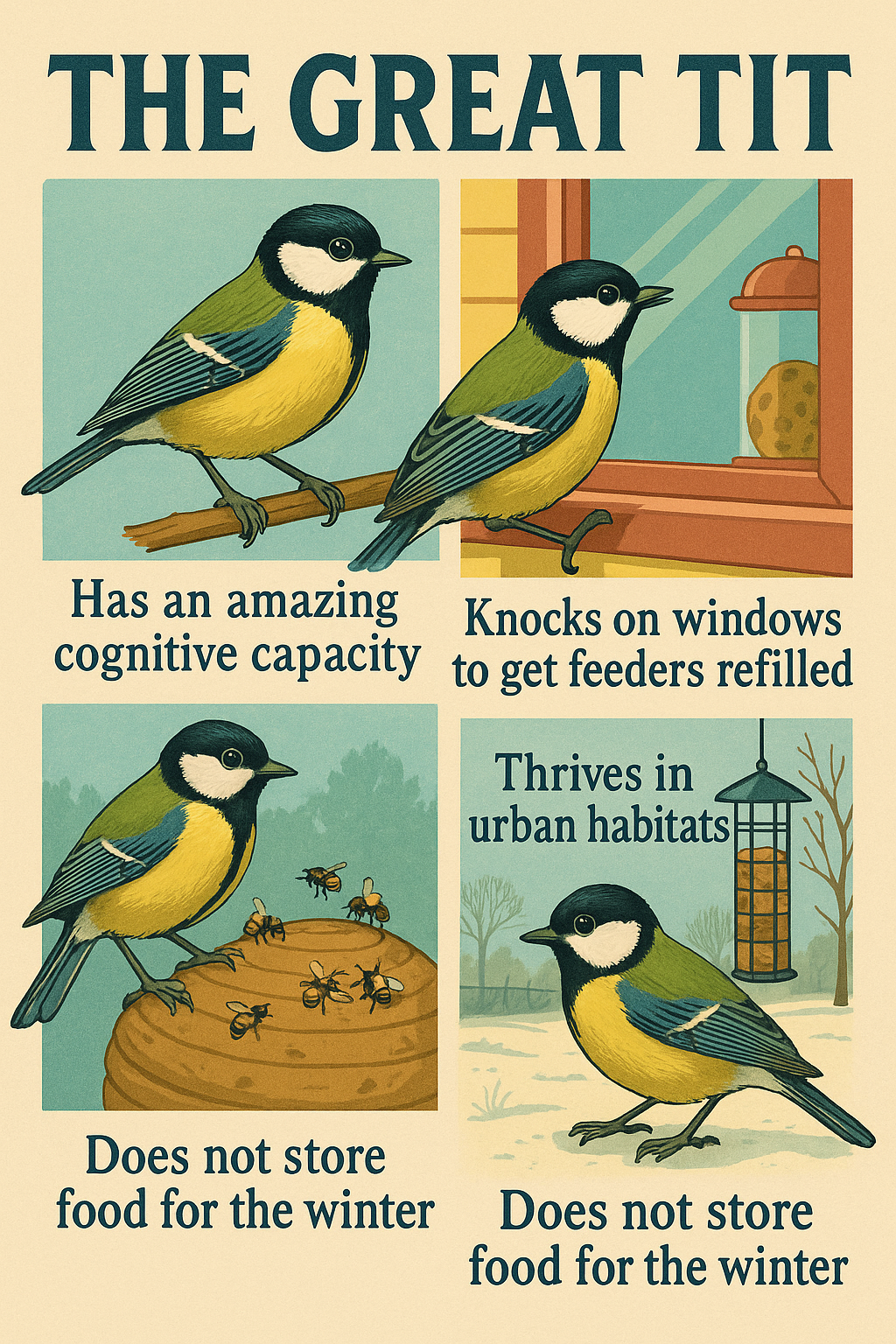
⸻
Paragraph 1
English:
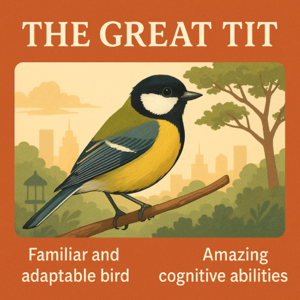
The Great Tit is one of the most familiar bird species in Europe and Asia — and one of the most interesting. The species shows a cognitive (认知的) capacity that is amazing for a slight bird weighing only 18 grams. It produces false alarms to scare other birds off seed feeders and knocks on kitchen windows to get feeders refilled. On cold winter days Great Tits drum on beehives, whereupon the bees will come walking out, easy victim for the hungry birds. In combination with the bird’s broad food preferences, its cleverness has resulted in an unusual response to urbanization.
中文:
大山雀是欧洲和亚洲最熟悉的鸟类之一——同时也是最有趣的鸟类之一。这种小小的鸟只有18克,却表现出惊人的认知能力。它会制造假警报,把其他鸟从食槽旁吓走,还会敲厨房窗户让人类重新添食。寒冷冬日,大山雀会敲打蜂箱,蜜蜂随即爬出,成为饥饿大山雀的容易猎物。结合它广泛的食物偏好,这种聪明才智让它对城市化做出了非同寻常的适应。
⸻
Paragraph 2
English:
By “unusual” I mean that Great Tits not only get by but thrive. Urbanization, which involves land development, is an increasing problem for wild animals the world over. Stressors such as pollution, noise, artificial light and the lower-quality food found in cities are considered unhealthy for animals. In a study, I measured levels of CORT, a common stress hormone in birds, in 188 urban and rural Great Tits. Contrary to expectations, the urban birds had consistently lower levels of CORT than forest birds. This finding is even more remarkable when you consider that urban populations are denser than forest ones, which should increase competition for territories and food and hence ramp up stress.
中文:
我所说的“非同寻常”,是指大山雀不仅能在城市中生存,甚至能繁荣发展。城市化意味着土地开发,它正成为全球野生动物面临的越来越大的问题。污染、噪音、人造光以及城市中质量较低的食物,都被认为对动物不健康。在一项研究中,我测量了188只城市与农村大山雀体内常见压力激素 CORT 的水平。与预期相反,城市大山雀的 CORT 水平持续低于森林大山雀。考虑到城市鸟类数量密度远高于森林鸟类,本应导致领地和食物竞争更激烈、压力更大,这一发现就显得更加令人惊讶。
⸻
Paragraph 3
English:
Adaptability has also allowed Great Tits to colonize (占据) a habitat that is in obvious contrast to an urban one. Originating in the temperate deciduous (落叶的) forests, the little bird is now common in boreal coniferous forests (北方针叶林). The species lived and grew in large numbers in northern Sweden in the early 1900s during the construction of railroads. Bird feeding has a long tradition in this country, and the rail builders took a liking to the birds, nailing up their leftover pork fat at the entrances to the huts where they slept. As the railroads extended northward, the Great Tits followed. Nowadays they are common in this habitat, but when the cold winter takes hold, they leave the forests and emerge at bird feeders in nearby towns and farms.
中文:
大山雀的适应能力也使它们能够占据一种与城市环境截然不同的栖息地。它们原本生活在温带落叶林,如今却在北方针叶林中十分常见。20世纪初,瑞典北部修建铁路时,大山雀开始大量繁衍。当地有长期的投喂鸟类传统,而铁路工人喜欢这些鸟,会把剩下的猪油钉在宿舍入口处喂它们。随着铁路向北延伸,大山雀也紧随其后。如今它们在这种栖息地很常见,但严冬来临时,它们会离开森林,到附近城镇和农场的喂鸟器旁出现。
⸻
Paragraph 4
English:
Cognition in the Paridae (山雀科) family is interesting and different species practice one of two entirely different wintering strategies. Unlike their close relatives, which are specialists that store many thousands of food items in separate locations as winter food, the Great Tits, in contrast, do not store food at all. Curious and innovative, they instead obtain food in all possible and seemingly impossible ways, especially from humans.
中文:
山雀科的认知能力十分有趣,不同物种在越冬策略上截然不同。与它们的近亲不同,那些近亲会专门把数以千计的食物储存在不同地点作为过冬粮,而大山雀则完全不储存食物。它们好奇且富有创新精神,会以各种可能甚至看似不可能的方式获取食物,尤其是从人类那里。
⸻
Paragraph 5
English:
The more we learn about animal cognition, the better we will be able to answer questions on many questions involving the awareness of animals: Is it justifiable, for example, to keep cognitively advanced animals such as apes and dolphins caged?
中文:
我们对动物认知了解得越多,就越能回答许多关于动物意识的问题:例如,把智力高度发达的动物(如猿类和海豚)关在笼子里是否合理?
⸻
⸻
1. familiar 熟悉的
• The bird is familiar to people in Europe.
• 这只鸟对欧洲人来说很熟悉。
2. species 物种
• Many species are threatened by urbanization.
• 许多物种受到城市化的威胁。
3. capacity 能力
• The bird shows a strong learning capacity.
• 这只鸟表现出很强的学习能力。
4. amazing 惊人的
• The bird has an amazing memory.
• 这只鸟有惊人的记忆力。
5. produce 产生;制造
• The machine can produce clean energy.
• 这台机器可以产生清洁能源。
6. combination 组合
• Success comes from a combination of effort and luck.
• 成功来自努力与运气的结合。
7. response 反应
• The animal made no response to the noise.
• 这只动物对噪音没有反应。
8. urbanization 城市化
• Urbanization changes wildlife habitats.
• 城市化改变了野生动物的栖息地。
9. involve 包含;涉及
• The job involves working at night.
• 这份工作包括夜间工作。
10. development 发展
• The city has seen rapid development.
• 这座城市经历了快速发展。
11. increase 增加
• The number of cars is increasing every year.
• 每年的汽车数量都在增加。
12. problem 问题
• Pollution is a serious problem.
• 污染是一个严重的问题。
13. pollution 污染
• Air pollution affects our health.
• 空气污染影响我们的健康。
14. noise 噪音
• The noise outside kept me awake.
• 外面的噪音让我无法入睡。
15. consider 认为;考虑
• Many people consider him a hero.
• 很多人认为他是英雄。
16. measure 测量
• The doctor measured his blood pressure.
• 医生测量了他的血压。
17. level 水平
• The water level is rising.
• 水位正在上涨。
18. expectation 预期
• Things didn’t go according to expectations.
• 事情没有按预期发展。
19. remarkable 引人注目的;显著的
• She made remarkable progress in English.
• 她的英语取得了显著进步。
