
STEVE INSKEEP, HOST:
If anybody with Internet access eventually sees the offer click here and take an online personality test, they're not very scientific. But they can be fun. Well, some employers are using more rigorous personality tests. So what can they really reveal about the people who take them? Here's NPR's social science correspondent Shankar Vedantam.
SHANKAR VEDANTAM, BYLINE: What kind of a person are you? This need to understand ourselves has fostered a thriving industry built on the marketing and sale of personality tests. Some categorize you by your favorite color.
WOMAN: And today you'll discover your true colors, the unique combination of traits that make up your personality.
VEDANTAM: Others promise that discovering your true personality will guide you to love.
MAN: Ever hear of the term hopeless romantic? Ever wonder if it happens to describe you? Well, welcome to ItsAllViral. And today, we're going to be seeing if you are indeed a hopeless romantic.
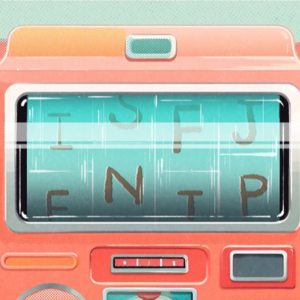
VEDANTAM: The most famous of these tests is the Myers-Briggs Type Indicator or MBTI. It sorts people into 16 personality types, each of which describes a way of seeing or dealing with the world. For example, if you're an ENFP, that means you're an extrovert, rather than an introvert, you rely on intuition more than facts, you're emotional rather than cerebral and you prefer to go with the flow rather than have a highly structured life. When Adam Grant, a psychology professor at the University of Pennsylvania first took the test, he found he was an INTJ, an introvert, an intuitor, a thinker and a judger.
But then a few months later, he took the test again.
ADAM GRANT: I got opposite scores on every dimension. I scored now I was ESFP.
VEDANTAM: Grant says he began to question the reliability and validity of the test.
GRANT: It falls well short of most conventional reliability standards. And the Myers–Briggs proponents themselves will tell you that it doesn't predict anything.
VEDANTAM: Many personality researchers put greater stock in a test known as the Big Five. Grant says the Big Five has lots of peer reviewed data to back it up.
GRANT: We can predict your job performance, your effectiveness in a team with different collaborators, your likelihood of sticking around in a job versus leaving as well as your probability of your marriage surviving, depending on the personality fit between you and your spouse.
VEDANTAM: Allen Hammer, a psychologist and former chair of the Myers-Briggs Foundation, disagrees with Adam. He says the Myers-Briggs is as reliable as other personality tests and that it can predict real world outcomes.
ALLEN HAMMER: When people matched roommates on their psychological type, they got a 65 percent decrease in requests for roommate changes.
VEDANTAM: The origin story of the Myers-Briggs is unconventional. In the 1940s, an American woman named Isabel Myers became interested in the ideas of Carl Jung, a contemporary of Sigmund Freud.
HAMMER: Her mother, actually, was interested in Jung first. And then Isabel, who was a housewife at the time and a writer, she got interested in type and then started looking at applications particularly around careers.
VEDANTAM: Isabel Myers and her mother, Katharine Cook Briggs, turned Jung's theories into a test. Myers also added her own ideas.
HAMMER: Isabel Myers added a fourth dimension, and that's represented by the letters J and P.
VEDANTAM: Hammer does agree with Grant on one thing. He says the test should never be the only factor in hiring or promoting someone.
📻 更多听力及文本见公众号【琐简英语】,回复"1"可进【打卡交流群】
NPR|What can a personality test tell us about who we are
4分钟 · 308·
308· 0
0
3080