
What does speed watching do to our brains?
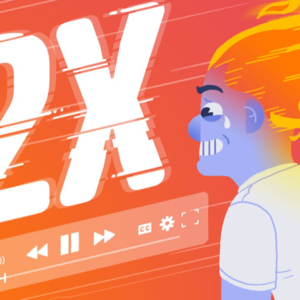
More and more of us are consuming digital content at increased speed. Whether it's on social media, watching a Netflix series, or listening to a podcast, speed watching and speed listening are becoming increasingly common.
Are there any risks associated with accelerated content consumption, then?
Potentially, yes, and it's due to what happens to the brain when you get used to watching or listening to content at accelerated speeds. It can affect a person's concentration, for example. They might struggle to then follow a conversation at a normal speed because the people they are talking to seem to be speaking too slowly compared with the videos they watch at accelerated speed.
Indeed, research published in Computers in Human Behaviour in 2025 suggested that speed watching could negatively impact all aspects of memory performance, i.e. attention, working memory, storage and retrieval, elaboration, and metamemorial or metacognitive processes.
Meanwhile, a report by CBC News reporter Ashley Fraser asked whether sped-up content was breaking our brains, citing research by University of California researcher Alan Castell.
"We found that retention goes downhill when you're listening beyond two times speed. Not so pleasant."
In other words, the more we speed things up, the harder it becomes to return to a normal rhythm. Speed watching doesn't cause illnesses, but it may increase anxiety, impatience, and even end up affecting our social relationships, in particular at work.
If you do find speed watching useful, you should still take breaks, turn off notifications, put content back to normal speed from time to time, and try as far as possible to do only one thing at a time.
The problem is that in reality, the brain doesn't always keep up, and the whole exercise can become counterproductive. Instead of saving time, you might end up losing it. That's because in order for us to learn, we need moments of pause to think and retain information. At normal speed, these breathing spaces exist naturally when someone speaks, but at an accelerated speed, they disappear.
There's another possible effect to take into account. A habit of speed watching can make social media platforms even more addictive than they already are. Hassan went on record comparing TikTok to an addicting drug that doesn't require you to think, saying it's easy to start using the platform for just five minutes a day and then end up using it for two hours a day. There you have it.
词汇表
speed watching 倍速观看,加速观看
speed listening 倍速收听,加速收听
accelerated [əkˈseləreɪtɪd] adj. 加速的,加快的
retrieval [rɪˈtriːvl] n. 检索,提取,取回
elaboration [ɪˌlæbəˈreɪʃn] n. 详细阐述,细化,加工
metamemorial [ˌmetəˈmeməriəl] adj. 元记忆的(关于记忆本身的认知)
metacognitive [ˌmetəˈkɒɡnətɪv] adj. 元认知的(关于认知本身的认知)
sped-up [ˈsped ʌp] adj. 加速的,加快的
retention [rɪˈtenʃn] n. 保留,留存,记忆保持
go downhill [ˌdaʊnˈhɪl] 走下坡路,恶化,变差
impatience [ɪmˈpeɪʃns] n. 不耐烦,无耐心,焦躁
counterproductive [ˌkaʊntəprəˈdʌktɪv] adj. 适得其反的,事与愿违的,产生相反效果的
retain [rɪˈteɪn] vt. 保持,保留,记住
breathing space 喘息空间,休息时间,停顿间隙
go on record [ˈrekɔːd] 公开表态,公开发表意见
addicting drug [əˈdɪktɪŋ] 成瘾性药物,致瘾药物
🪴翻译和pdf见公众号【琐简英语】,回复"1"可进入【打卡交流群】

Do you really know|倍速观看如何影响我们的大脑?
3分钟 · 2775·
2775· 0
0
27750