
Why can we see faces everywhere?
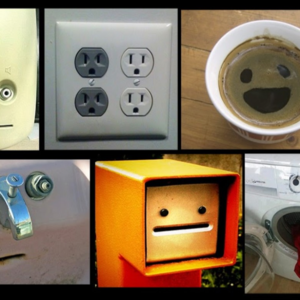
Are you one of those people that sees faces in inanimate objects? Researchers at the National Institutes of Health have been trying to find out why this is.
They have pinpointed a circuit in an evolutionarily ancient part of the brain. It's called the superior colliculus, and it helps us recognise facial features. It triggers movement of the eyes, turning of the head and enables us to detect faces.
This study helps us understand face pareidolia – the common psychological phenomenon where the brain perceives illusions of faces in objects, like seeing faces in the clouds, exteriors of houses or even in a slice of toast.
A study carried out by Susan Wardle showed that the parts of the human brain that respond to faces are sensitive to the shapes of other objects, and that our visual system is optimised for detecting face-like structures.
To test whether the superior colliculus might help in face detection specifically, researchers assembled a collection of images, including faces, biological non-face objects, like hands and arms, and other miscellaneous items.
They then showed these images to adult monkeys in their peripheral field and recorded neural responses in the superior colliculus. It was found that detection of faces was much faster and preferred by neurons. This explains how our brains do it.
But why do our brains do it? Well, it's mainly for survival. According to Dr Amanda Robinson at the University of Queensland, face pareidolia tells us a lot about how we recognise social cues. We can determine whether the person or thing looking at us is a threat because of their facial expression.
Richard Krauzlis, senior author of the study, explained that "quick recognition is a key skill in humans and other primates", such as gorillas and chimps. Additionally, biologists have observed human facial recognition and neural developments among species ranging from dogs, sheep, birds and even some insects.
What we know about recognition of faces and expression can further inform research on conditions such as autism, where face detection and recognition are often impaired from early childhood. It also helps us understand why we think we saw a friendly face in the living room wallpaper.
词汇表
inanimate [ɪnˈænɪmət] adj. 无生命的,无生气的
pinpoint [ˈpɪnpɔɪnt] vt. 精准定位,准确指出
circuit [ˈsɜːkɪt] n. 回路,电路,线路
evolutionarily [ˌiːvəˈluːʃənərəli] adv. 进化上,演化地
superior colliculus [suːˈpɪəriə kəˈlɪkjʊləs] 上丘(负责多感觉整合和视觉反射的中脑结构)
detect [dɪˈtekt] vt. 察觉,发现,识别,检测
face pareidolia [ˌpærɪˈdəʊliə] 人脸空想性错视(指将无生命的物体看成是人脸的现象)
illusion [ɪˈluːʒn] n. 错觉,幻觉,幻想
exterior [ɪkˈstɪəriə] n. 外部,外观,外表
a slice of toast 一片吐司,一片烤面包
optimise [ˈɒptɪmaɪz] vt.使优化,使完善,充分利用
assemble [əˈsembl] vt. 收集,集合,汇集
miscellaneous [ˌmɪsəˈleɪniəs] adj. 各种各样的,混杂的
peripheral field [pəˈrɪfərəl] 周边视野,外围视野
neural response [ˈnjʊərəl] 神经反应
neuron [ˈnjʊərɒn] n. 神经元,神经细胞
primate [ˈpraɪmeɪt] n. 灵长类动物
gorilla [ɡəˈrɪlə] n. 大猩猩
chimp [tʃɪmp] n. 黑猩猩
autism [ˈɔːtɪzəm] n. 自闭症,孤独症
impaired [ɪmˈpeəd] adj. 受损的,障碍的,有缺陷的
wallpaper [ˈwɔːlpeɪpə] n. 墙纸,壁纸
📖 翻译、pdf见公众号【琐简英语】,回复"1"可进【打卡交流群】

BBC随身英语|为什么我们到处都能看到人脸?
3分钟 · 2628·
2628· 0
0
26280