Second-screening? You're not alone
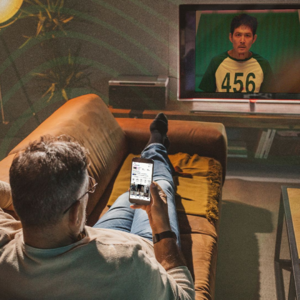
OK, I'm not proud of it, but sometimes when I'm watching TV, I might not actually be watching. Sometimes I'm just more tempted by my phone. Be honest, do you do the same? If you do, then we're not alone, lots of us watch TV with our phones in our hands.
How is TV changing to accommodate this? Let's start by looking at the data. Studies have investigated different countries across the world and many of them reported that most people use their phone while watching TV.
While the classic stereotype is that it's younger people who find it hard to put their phone down, the data actually shows that second-screening is common in most age groups under 55. Younger age groups are more likely to be looking at social media or food delivery apps, while older age groups prefer banking, e-commerce and travel.
How are producers dealing with this? A number of screenwriters have reported being told that they need to make programmes easier to follow for distracted viewers. Reports say that showrunners have asked for more exposition in dialogue, repetition of plot points and increased use of voice-over to make things clearer for those who aren't looking.
Some critics and viewers have complained that this could be making series less complex and dialogue less natural. Second screens are not the only reason that these things happen. Television drama writing developed from radio drama writing, which has to use dialogue to compensate for the lack of visuals.
When books are adapted for TV or film, one challenge is how to tell the whole story with less narration. All this means that exposition has often been a feature of TV writing. As series became more prestigious and cinematic since the early 2000s, this clear signposting of plot points had become less common.
Of course, TV viewers and TV programmes are not all the same. There is space for both casual and more complex programmes. Maybe the most important thing is for us to remember when to put our phones down.
词汇表
be tempted by [ˈtemptɪd] 被…诱惑,忍不住想
accommodate [əˈkɒmədeɪt] vt. 适应,顺应(新情况)
stereotype [ˈsteriətaɪp] n. 刻板印象,成见
second-screening [ˈsekən ˈskriːnɪŋ] n. 第二屏幕(看电视、电影等主屏幕时同时使用手机等第二设备的行为)
e-commerce [ˈiː kɒmɜːs] n. 电子商务
screenwriter [ˈskriːnraɪtə(r)] n. 编剧,剧本作家
distracted viewer [dɪˈstræktɪd ˈvjuːə(r)] 分心的观众,不专注的观众
showrunner [ˈʃəʊrʌnə(r)] n. 制片人,剧集主管,节目统筹
exposition [ˌekspəˈzɪʃn] n. (戏剧、电影中的)背景说明,情节交代
plot point [plɒt] 情节关键点,剧情转折点
voice-over [ˈvɔɪs əʊvə(r)] n. 旁白,画外音
critic [ˈkrɪtɪk] n. 评论家,批评者
drama writing 剧本创作,戏剧创作
visual [ˈvɪʒuəl] n. 视觉画面,视觉元素
narration [nəˈreɪʃn] n. (影视的)解说,旁白
prestigious [preˈstɪdʒəs] adj. 有声望的,精良的
cinematic [ˌsɪnəˈmætɪk] adj. 电影般的,有电影质感的
signposting [ˈsaɪnpəʊstɪŋ] n. (情节)提示,指引,预示
📖 翻译、pdf见公众号【琐简英语】,回复"1"可进【打卡交流群】

BBC随身英语|边看电视边刷手机?你不是一个人
2分钟 · 4953·
4953· 3
3
49533
HD377302e
2026.3.18
0
有文本吗 有些听不懂
琐简英语:点开标题就有了